

Jeff Monson: “Boxing
Might Be The Most Technical Combat Sport”!
(November 5th) Jeff Monson brought his career to a close at IBA.PRO 21 in Brest, Belarus, on 25 October. Before his farewell bout, the former UFC heavyweight title challenger spoke to the International Boxing Association (IBA) about knowing when to walk away, the defeats that shaped his life – and why boxing has earned his deepest respect.
“Maybe I’m not a champion anymore, but I can still compete. That’s how I want to be remembered.”
— Jeff Monson
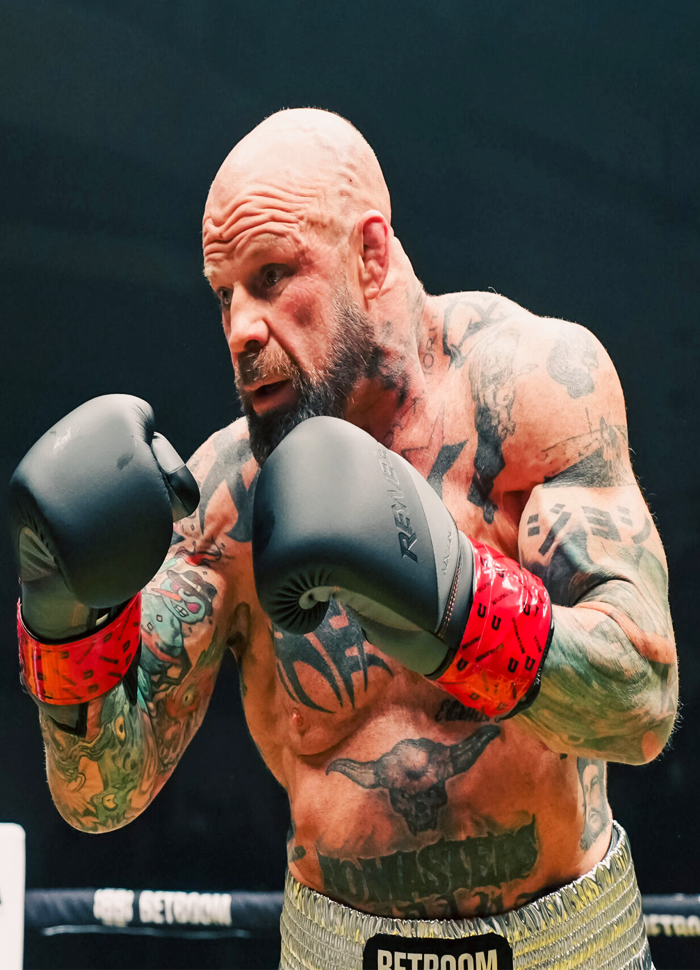
For three decades, Jeff Monson was one of combat sport’s most restless competitors. He earned a shot at the UFC heavyweight title, shared the cage with Fedor Emelianenko, collected major grappling titles and, well into his fifties, kept finding new ways to test himself. At 55, the US-born veteran and Russian citizen chose his moment to stop. On 25 October in Brest, he lost to Ivan Sholtoianu (MDA) by unanimous decision over four rounds in an IBA Legend bout at IBA.PRO 21, which he had insisted beforehand would be the last fight of his career involving punches.
“My body just isn’t at the same level anymore. When I go to the gym and see the young guys, I realise that. I still have a lot of experience, but my body isn’t the same. I don’t want people to come and watch Jeff Monson and think, ‘He’s not at that level anymore. He can’t really compete.’ I want them to say, ‘He’s 55, but he can still fight. He’s still a good athlete,’” Monson told IBA before the bout.
The moment it became clear
Monson has talked about retiring before, but this time, he says, it is real. The decision had been building for years, and it crystallised a few weeks before the bout during a sparring session with young fighters in Yekaterinburg.
“I thought, ‘Oh my gosh, these guys are the next generation.’ That was the moment. I thought, ‘This is it. Absolutely, this is it.’”
He prepared for his farewell in Ufa, where he lives, training almost every day with his friend and training partner Denis. Unlike many athletes who struggle to let go, Monson never fought because he had nothing else in his life. He has a family, government work in Russia and a growing network of free sports schools for children. What kept him going was simply a love of sport.
“Inside, I still feel like a fighter. When I go to a gym and see young athletes, I remember myself 20 years ago. Sometimes I feel jealous because I remember what I could do. It’s hard to look in the mirror and accept that you’re no longer the person you used to be.”
The defeats that shaped him
Asked which moments of his career stand out, Monson points first to two losses. His defeat to Tim Sylvia in the UFC heavyweight title fight still stays with him: a win would have changed his life and made him a UFC champion forever.
Then there was Fedor Emelianenko, a contest Monson calls the best and worst fight of his life. Having watched wrestler after wrestler take the Russian down and fail to do anything with him, Monson believed he had found the answer: wait for Emelianenko to attack, take him down and submit him.
“But he was too smart. He turned it into a kickboxing match, and I lost.”
Yet that defeat set his life on a new course. Afterwards, Monson met President Putin, was invited back to Russia and eventually became a Russian citizen.
A title for the family
The victory that meant the most came on the mat rather than in the ring: the world jiu-jitsu championship in Krakow, Poland. For years, his two children had only seen their father compete on television while he trained in Miami and travelled the world for fights. In Krakow, for the first time, they were there in person.
“When I won, it meant so much because they could finally understand why their dad had spent so much time away from home.”
They never watched him fight in MMA. His daughter wanted to, but his wife was always too scared to let the children see him getting hurt – something Monson says he fully understands.
A new respect for boxing
Monson used to argue that MMA was the hardest combat sport, because it demands everything from boxing and kickboxing to wrestling, jiu-jitsu and sambo. Boxing has changed his mind.
“Now that I’ve immersed myself in it, I have a much greater appreciation for boxing. You can’t use takedowns or jiu-jitsu. You have to solve everything with your boxing skills.”
He has been a fan since childhood, when he watched Sugar Ray Leonard, Roberto Duran and Thomas Hearns on Sunday afternoons. If he could borrow any boxer’s style, it would be Duran’s, for the way he came forward looking for the knockout. Not long ago, Monson even met Hearns, one of his childhood heroes, on a flight, and was delighted to find him a genuinely nice person.
Even so, he hesitates to call himself a boxer. He has improved a lot, he says, but claiming the title would be “a bit of a stretch”. And he has never boxed for money. In his jiu-jitsu days, he often paid for his own travel to compete for prizes of $500 or $1,000. Boxing is a challenge, and, after too many injuries, it is the one combat sport his body can still handle.
He has also tried bare-knuckle fighting, which he found even harder than boxing. The cuts came easily, he admits, though he believes his clinch work would have suited the sport had he discovered it younger.
Monson on the heavyweights
Asked about the greatest heavyweights, Monson singles out two men he feels are underrated: Larry Holmes, for his long reign as champion, and Lennox Lewis, who avenged every defeat of his career in a rematch. He also places Oleksandr Usyk among the all-time greats.
“Is there anyone who’s actually better than Usyk? No, I don’t think so.”
A Tyson Fury–Anthony Joshua fight, in his view, has come a few years too late. He would favour Fury, provided he prepares properly. He would also back Murat Gassiev against Deontay Wilder, calling the Russian the better boxer despite Wilder’s devastating right hand.
“Every time I watch him fight, he seems to get a little better. I don’t think anyone knows what his limit is yet.”
Life after the ring
Retirement will not slow Monson down. He currently runs 38 free sports schools for children across Russia and dreams of opening more than 100. When a city invites him, he helps open a school, trains a coach, sends training materials every week and visits twice a year to give free masterclasses. Through his Glavny Boy project, he also helps soldiers who have returned from combat with injuries, using sport, psychological support and partnerships with colleges to help them rebuild their lives.
He may not be finished with competition altogether. Monson is open to taking part in Real American Freestyle (RAF) wrestling, but said before the bout that his days of punching and being punched would end in Brest.
“I’ll always be on the mat in some capacity.”
Getting up again
Drawing on six years he spent working in psychology in the United States, Monson tries to give the children he coaches one lesson above all: they will fail.
“They will lose. They’ll get injured. People will laugh at them. They won’t succeed at everything they try. But you have to get up every time. That’s what sport teaches you: resilience and discipline.”
It is a philosophy that has carried him through three decades of victories and defeats, and one he took with him into his final fight.
“Losing isn’t the end. What matters is what you do afterwards.”
Surov Defeats Smiahlikau As Monson Bids Farewell
To Boxing At IBA.PRO 21 In Brest!
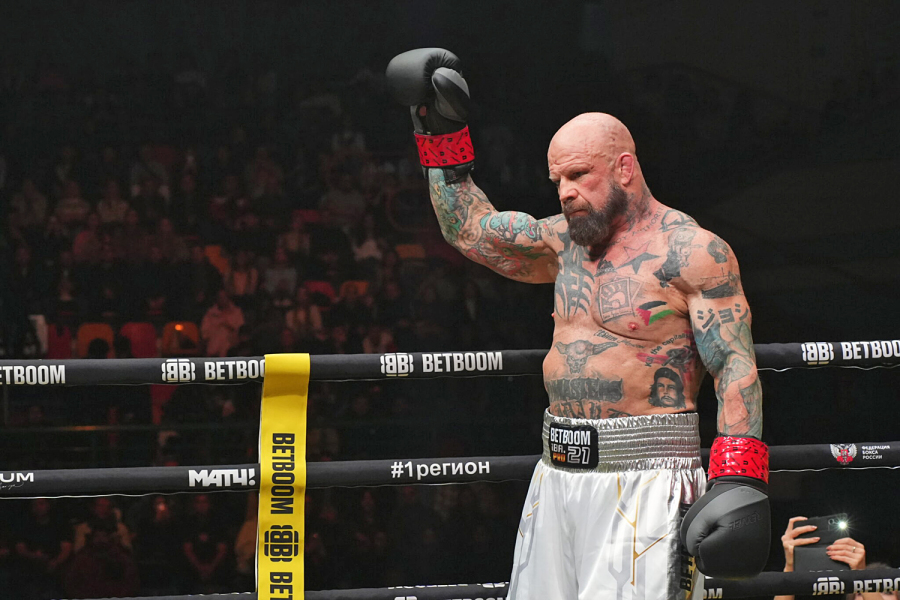
(October 25th) Teymuraz Surov (SRB) claimed a majority-decision victory over Uladzislau Smiahlikau (BLR) in the heavyweight main event of IBA.PRO 21 in Brest, Belarus, while MMA veteran Jeff Monson (RUS/USA) made his final boxing appearance in a defeat to Ivan Soltoianu (MDA).
The seven-bout card, organised by the International Boxing Association (IBA), featured professional boxing and contests fought in MMA gloves, with athletes from seven countries competing in Brest.
“IBA.PRO 21 in Brest perfectly reflected what our platform is all about: bringing together athletes from different combat sports backgrounds and giving them the opportunity to compete on an international stage.
From Jeff Monson and Ivan Soltoianu bidding farewell after remarkable careers to talented young prospects such as Igor Sviridchenkov taking the next step, the evening showcased the diversity, excitement and future of combat sports.
I would like to thank the fans in Brest and the viewers around the world who joined us for a memorable night of action,” IBA Secretary General and CEO Chris Roberts OBE said.
Teymuraz Surov (SRB), a Russian national championship medallist representing Serbia, defeated Tokyo Olympian Uladzislau Smiahlikau (BLR) by majority decision over six rounds.
Surov pressed forward from the opening bell, while Smiahlikau looked to counter. The Serbian representative damaged his opponent’s nose in the second round and continued to land the cleaner punches, doing enough to earn the decision.
“My opponent was older and more experienced, but nothing he did surprised me. I wasn’t worried at any point. Everything went according to plan, and I’d like to thank him for sharing the ring with me.
I dedicate this victory to my younger brother, who has recently earned his Master of Sport title. Maybe one day he’ll catch up with me — or even surpass me!” Surov said.
Jeff Monson (RUS/USA) and Ivan Soltoianu (MDA), whose combined age was 114, met in a special four-round contest for the IBA Legend title. Soltoianu won by unanimous decision after four two-minute rounds. Both veterans announced their retirement immediately afterwards.
Monson, a former UFC heavyweight title challenger, reflected on his 29-year career.
“I respect every boxer. Boxing is a much better sport than I ever realised. I’ve been a fighter for 29 years and had more than 100 fights. Today was my last fight. I’m getting old, and my body is tired, but I’ve had an incredible time. I have so many fans, and I want to tell them something: I’m your fan, too. Thank you so much,” Monson said.
Aliaksandr Radzionau (BLR) defeated Viktor Perez (CUB) over six rounds at 66.7 kg in a meeting between two accomplished amateur boxers.
Perez set an aggressive pace from the opening bell, but Radzionau used his movement and counterpunching to keep the Cuban at bay. The Belarusian maintained his composure through six fast-paced rounds to secure the victory on the judges’ scorecards.
Shoxrux Ilhomov (UZB) scored a technical knockout against Alexander Nekrash (BLR) in their 90 kg contest fought in MMA gloves.
Both athletes traded heavy punches from the opening seconds before Ilhomov landed a powerful shot that left Nekrash hurt and forced the stoppage.
“My nickname is ‘The Tank’ for a reason. When I land a punch, it does damage,” Ilhomov said.
Leo Careri (RSA) opened the evening with a second-round stoppage of Artiom Popovici (MDA) at 79.4 kg. A clean right hand from the South African prompted the referee to end the contest.
“My girlfriend told me not to make her stress too much, so I didn’t want to keep her waiting!” Careri joked.
At 69.9 kg, Ilya Luzhinskiy (BLR), who accepted the bout at short notice, scored a first-round knockdown against Erik Khachatryan (ARM). Khachatryan responded with sustained pressure, while Luzhinskiy relied on counterpunching. Their three-round contest in MMA gloves ended in a draw.
Igor Sviridchenkov (RUS) earned the third victory of his professional career after a bloody six-round contest against Viktar Murashkin (BLR) at 71 kg.
Murashkin proved more resilient than expected, but Sviridchenkov did enough to secure the win on the judges’ scorecards.
“My main goal was to go the full six rounds and show what I can do over a longer distance. My opponent’s stamina surprised me. I expected him to tire much earlier. I didn’t even notice the blood. When you’re in the ring, you have an opponent in front of you and a target to hit. Nothing else matters,” Sviridchenkov said.

 Print