
Boxing Community Mourns the Passing of Former Heavyweight Contender Denis Boytsov, 40!
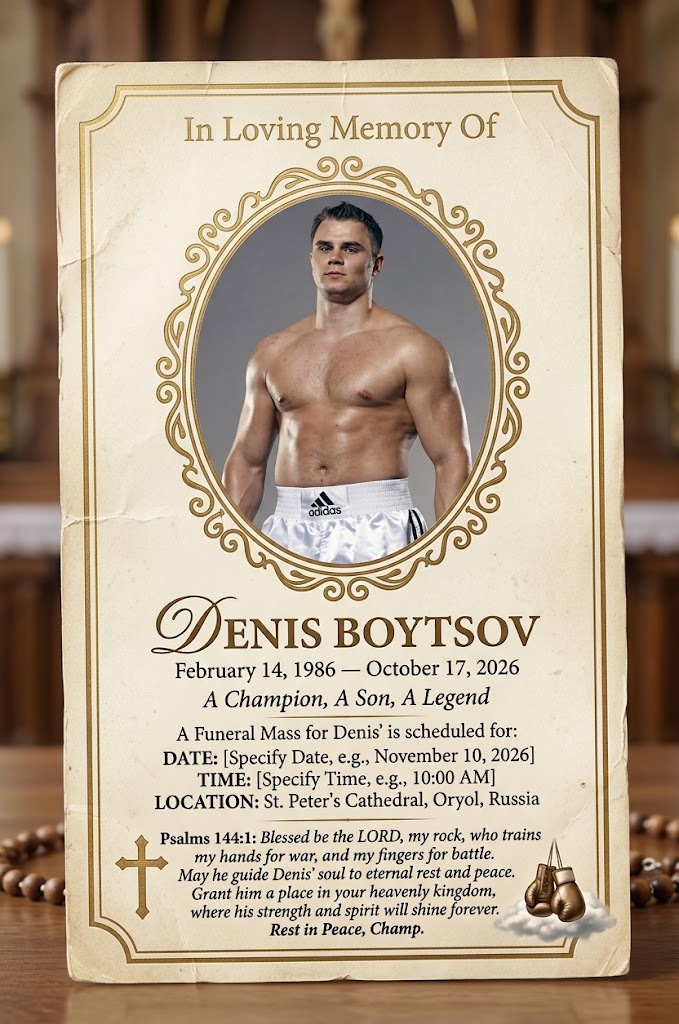
(October 18th) Denis Nikolayevich Boytsov, the former Russian heavyweight contender whose explosive punching power earned him the nickname “Russian Tyson,” has died at the age of 40. His death was announced on October 17 by the Oryol Region Center for Physical Culture and Sports Events. According to reports from Russian news organizations, Boytsov died suddenly at home, with his father, Nikolai Boytsov, telling the Russian news agency TASS that a detached blood clot was responsible. Born on February 14, 1986, in Oryol, Boytsov was once considered one of the most promising heavyweight prospects in professional boxing before catastrophic injuries sustained in Berlin in May 2015 permanently changed the course of his life.
According to his father’s account to TASS, Boytsov suffered a sudden medical emergency while at home with his wife. Nikolai Boytsov said his son’s wife had fed him and was attempting to turn him onto his side when he suddenly began convulsing and turned blue. Despite efforts to obtain emergency assistance, he died within minutes. His father described the death as instantaneous. The reported cause was a detached blood clot, although this account has not been independently established here through a published medical or post-mortem report.
Funeral services were scheduled for Sunday, October 18, in the village of Streletsky in Russia’s Oryol region. According to Russian media reports, the Orthodox funeral service was due to begin at approximately 12:30 p.m. Moscow time, followed by the burial and a memorial gathering. Boytsov is survived by his wife, his father, Nikolai, and other family members. Public reports available at the time of publication did not provide a verified account identifying all surviving relatives.
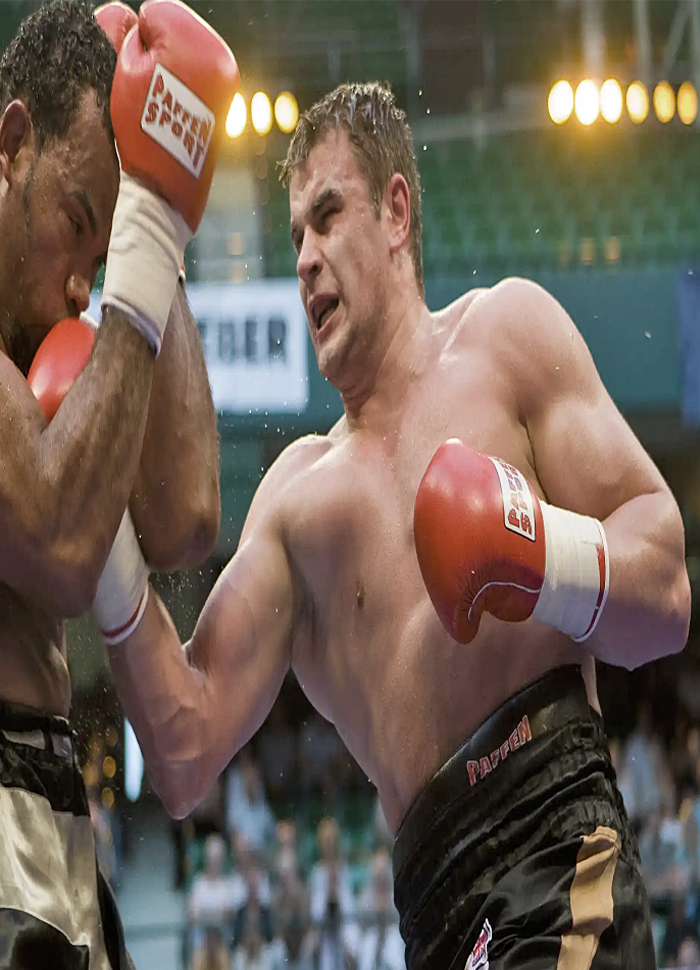
Boytsov’s death brings renewed attention to the extraordinary promise of a fighter who appeared destined to challenge the leading heavyweights of his generation. Standing approximately 6 feet 1 inch tall, the Russian boxer built a reputation around aggressive pressure, fast hands and considerable knockout power. His professional record of 36 victories against one defeat, with 27 wins inside the distance, reflected the effectiveness of his attacking style. For much of his career, he was regarded as a serious contender for a major world heavyweight championship.
Before turning professional in 2004, Boytsov established an impressive amateur résumé. He won international age-group championship honors, including the 2004 World Junior Championships at super-heavyweight in Jeju, South Korea. His amateur achievements helped establish him as one of Russia’s most promising young heavyweight talents and attracted the attention of Germany-based Universum Box Promotion, with which he began his professional career.
Boytsov made an immediate impression in the professional ranks, winning his early contests with a combination of hand speed, aggressive combinations and heavy punching. His performances earned him the nickname “Russian Tyson,” a reference to former undisputed heavyweight champion Mike Tyson and the explosive, forward-moving style that had made Tyson one of boxing’s most feared punchers. Although the comparison reflected his approach and reputation rather than an identical fighting style, it helped establish Boytsov’s profile among heavyweight boxing followers.
In September 2006, Boytsov captured the vacant World Boxing Council (WBC) Youth World Heavyweight title. He continued his development with victories over increasingly experienced opposition and added the World Boxing Association (WBA) Intercontinental Heavyweight title in 2009, followed by the World Boxing Organization (WBO) European Heavyweight title that year. Those accomplishments strengthened his standing in the division and positioned him among the leading contenders outside the championship picture.
Boytsov’s rise gathered momentum as he extended his professional winning streak and entered the international heavyweight rankings. At his peak, he was ranked as high as No. 2 among the world’s heavyweight contenders, behind then-dominant champion Wladimir Klitschko. A potential high-profile showdown with the division’s leading names, including discussions surrounding a possible meeting with British heavyweight Tyson Fury, formed part of the growing anticipation surrounding his career. Boytsov appeared to have the physical tools and record to compete for the sport’s biggest prizes.
His unbeaten run ended on November 23, 2013, when he suffered the only defeat of his professional career against Australian heavyweight Alex Leapai. Boytsov lost a unanimous decision over 10 rounds in Bamberg, Germany, in a contest that interrupted his rise toward a world-title opportunity. He subsequently returned to winning ways, recording three consecutive victories. His final professional appearance came on March 21, 2015, in Rostock, Germany, where he defeated Brazil’s Irineu Beato Costa Junior, who retired at the end of the second round.
Less than two months later, Boytsov’s boxing career and personal life were transformed by a serious incident in Berlin. On May 3, 2015, he was found unconscious with severe head injuries in a subway tunnel in the city’s Charlottenburg district, between the Bismarckstrasse and Wilmersdorfer Strasse stations. He also suffered injuries to his hands. The 29-year-old boxer was hospitalized with critical brain trauma and placed in a medically induced coma for approximately seven weeks as doctors treated the swelling and other complications associated with his injuries. He subsequently underwent multiple operations.
The circumstances surrounding the Berlin incident attracted considerable attention. Early reports raised the possibility of an assault, and a statement associated with Boytsov at the time referred to alleged threats he had received in 2013 in connection with his boxing activities. Those reports prompted speculation about whether the incident might have been connected to his professional career or disputes involving people around the sport. However, allegations of foul play were not established as fact. Contemporary Associated Press reporting quoted Berlin police as saying that witness interviews and available video footage indicated the incident appeared to have been an accident. Accordingly, the circumstances should be distinguished from the speculation that initially surrounded the case.
The consequences were devastating. Despite surviving the initial injuries and undergoing prolonged rehabilitation, Boytsov never regained the independence required to return to professional boxing. Reports in later years described him as unable to walk or speak independently and in need of continuous care. His career, which had once promised a possible challenge for the world heavyweight championship, was over at just 29 years of age.
Boytsov spent several years receiving rehabilitation and medical care in Germany before returning to his native Oryol in approximately 2021 to continue his recovery closer to his family. His hometown remained central to his story, both as the place where his boxing journey began and where he spent his final years. His long struggle following the Berlin incident became an important part of the public account of his life, although the precise medical relationship between those injuries and his eventual death has not been established in the reporting reviewed for this article.
The Oryol Region Center for Physical Culture and Sports Events, which announced his death, remembered Boytsov as a talented athlete whose career had been interrupted by severe injury. Tributes also recalled his character outside the ring. Russian promoter Vladimir Khryunov, who had encountered Boytsov during his years in Germany, praised the boxer’s charisma and upbringing while expressing sadness at his death. For those who followed his career, the loss represents the passing of a fighter whose potential was evident long before tragedy took him away from the sport.
Boytsov’s professional record stands as a reminder of the considerable achievements he made before his life changed in 2015: 37 contests, 36 victories, 27 knockouts and just one defeat. His WBC Youth, WBA Intercontinental and WBO European titles reflected a sustained rise through the heavyweight ranks, while his peak ranking demonstrated how close he came to the division’s elite. Yet his legacy extends beyond numbers and championships. He will also be remembered for the years of adversity that followed his final fight and the prolonged struggle endured by him and his family.
Denis Boytsov’s passing marks the end of a life that held extraordinary promise and endured profound hardship. Known as the “Russian Tyson,” he was one of his generation’s most promising heavyweight contenders, possessing the punching power and ability to compete among boxing’s elite. The devastating injuries he suffered in Berlin in 2015 brought his professional career to an untimely end at just 29, leaving the ambitions of a gifted fighter tragically unfulfilled. He passed away at the age of 40, leaving behind a boxing legacy that will be remembered for both his remarkable achievements and the promise of what might have been.
The boxing community extends its deepest sympathies to his wife, daughter, father, extended family and all those who stood by him throughout his long and difficult journey. Their loss is a deeply personal one, shared in spirit by those who followed Boytsov’s career and remember the talent he brought to the ring.
May Denis Boytsov rest in peace, and may his loved ones find strength and comfort in one another and in the knowledge that his name and memory will endure in the sport he devoted his life to.

 Print
Print