
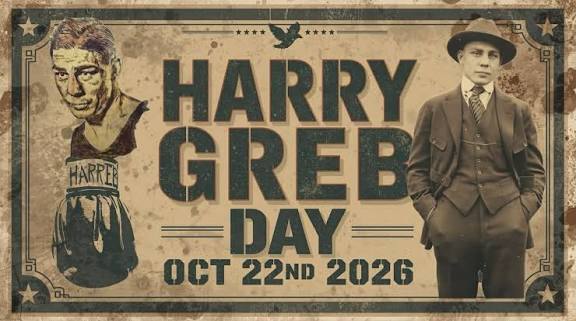
Pittsburgh Honors Boxing Legend Harry Greb
With Centennial Street Sign Tribute!
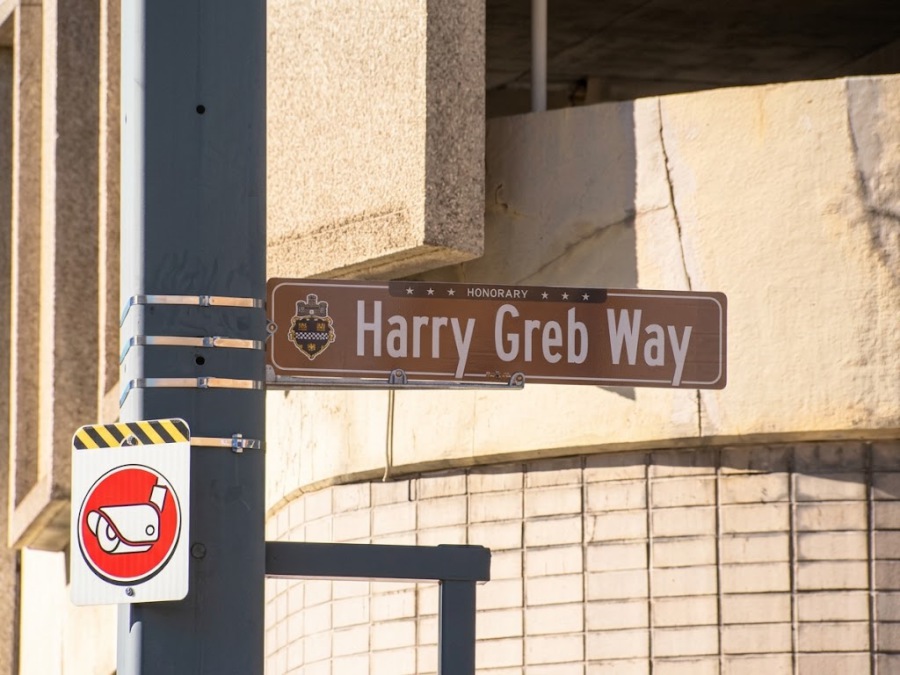
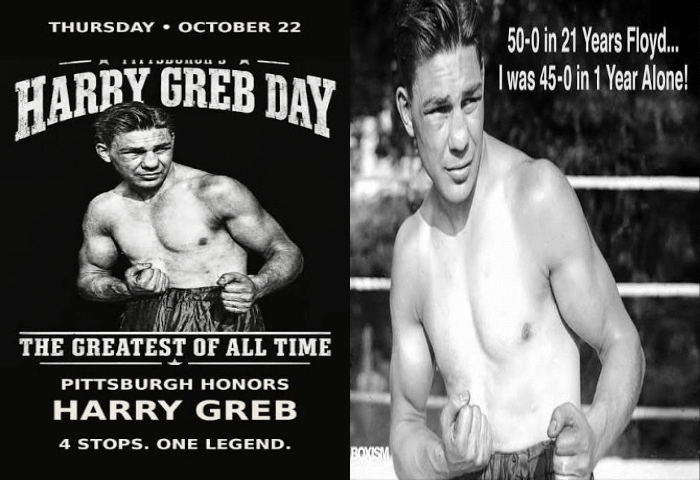
(October 24th) Pittsburgh has honored one of the greatest fighters in boxing history with the unveiling of an honorary “Harry Greb Way” street sign at the corner of Fifth Avenue and Washington Place, near the Pittsburgh Lyceum, where the legendary former world middleweight champion trained. The tribute coincides with the centenary of Greb’s death on October 22, 1926, with city officials also proclaiming Thursday, October 22, 2026, as “Harry Greb Day.”
Known throughout boxing as “The Pittsburgh Windmill,” Greb was renowned for his relentless pace, aggressive fighting style and extraordinary willingness to face leading opponents across multiple weight divisions. Born Edward Henry Greb in Pittsburgh on June 6, 1894, he turned professional in 1913 and developed into one of the most formidable fighters of his era. His exceptional activity, durability and ability to overcome larger opponents established his reputation among boxing historians as one of the sport’s all-time greats.
Greb captured the world middleweight championship on August 31, 1923, defeating Johnny Wilson over 15 rounds at New York’s Polo Grounds. He successfully defended the title six times before losing it to Tiger Flowers by split decision on February 26, 1926. Flowers defeated Greb again in their August rematch, which proved to be the Pittsburgh champion’s final professional contest. Greb’s reign from 1923 to 1926 remains one of the defining chapters in the history of boxing’s middleweight division.
One of Greb’s most celebrated achievements came on May 23, 1922, when he defeated Gene Tunney to win the American light-heavyweight championship. The victory handed Tunney the only defeat of his professional career. Tunney subsequently moved on to become world heavyweight champion, defeating Jack Dempsey in 1926. Greb and Tunney fought five times, with their rivalry becoming one of the most significant in boxing history. Greb’s triumph over the bigger Tunney further demonstrated the speed, stamina and relentless pressure that made him such a difficult opponent.
The honorary street sign carries particular significance because of its connection to Greb’s Pittsburgh roots. Situated near the historic Pittsburgh Lyceum, the location recalls the city’s boxing culture and the environment in which Greb developed his skills. The recognition is intended to help preserve his legacy and introduce his remarkable accomplishments to a wider audience in his hometown. The designation is an honorary street tribute; the published report does not indicate that the city has legally renamed the street or changed its official addresses.
Michael McSorley of the Conn-Greb Boxing Club spoke about the importance of recognizing the fighter in the city where his story began. “For too long his name has been better known among boxing historians and around the world than amongst people here in his own hometown. Today helps change that,” McSorley said. His remarks captured the purpose of the tribute: to ensure that a fighter whose achievements are widely respected within boxing is also remembered by the people of Pittsburgh.
Greb’s professional career was extraordinary even by the standards of boxing’s busiest eras. Competing from 1913 to 1926, he fought an exceptionally high number of bouts against champions, contenders and leading fighters across several divisions. Including newspaper-decision victories, Greb defeated 16 future International Boxing Hall of Fame inductees, among them Jack Blackburn, who was honored as a trainer rather than as a boxer.
Greb was inducted into the International Boxing Hall of Fame in 1990, having already received recognition from The Ring magazine’s Hall of Fame in 1955. His reputation has endured because of his exceptional achievements, his willingness to challenge elite opponents and his success against fighters naturally larger than himself. He also competed against Black fighters at a time when racial barriers excluded many from opportunities against prominent white champions, including his eventual title rival Tiger Flowers. His career remains an important part of the wider history of American boxing.
Greb’s life ended tragically at just 32 years of age. After suffering extensive injuries during his boxing career and in automobile accidents, he underwent surgery in Atlantic City, New Jersey, on October 21, 1926. He died the following day. Historical accounts differ in how they describe the immediate medical cause, so the circumstances are best summarized as his death following surgery rather than attributing it definitively to a single complication. His body was returned to Pittsburgh, where thousands of mourners gathered to pay their respects. He was buried at Calvary Cemetery alongside his wife, Mildred.
A century after his passing, the unveiling of “Harry Greb Way” provides a lasting reminder of a champion whose name deserves recognition well beyond boxing’s historical record books. For Pittsburgh, the tribute celebrates a native son who rose from the city’s local boxing scene to become world middleweight champion and one of the most accomplished fighters of his generation. As the city marks the centenary of his death, the honorary street sign offers a renewed opportunity to preserve Greb’s memory and ensure that the legacy of “The Pittsburgh Windmill” continues to inspire future generations of boxing fans.

 Print