
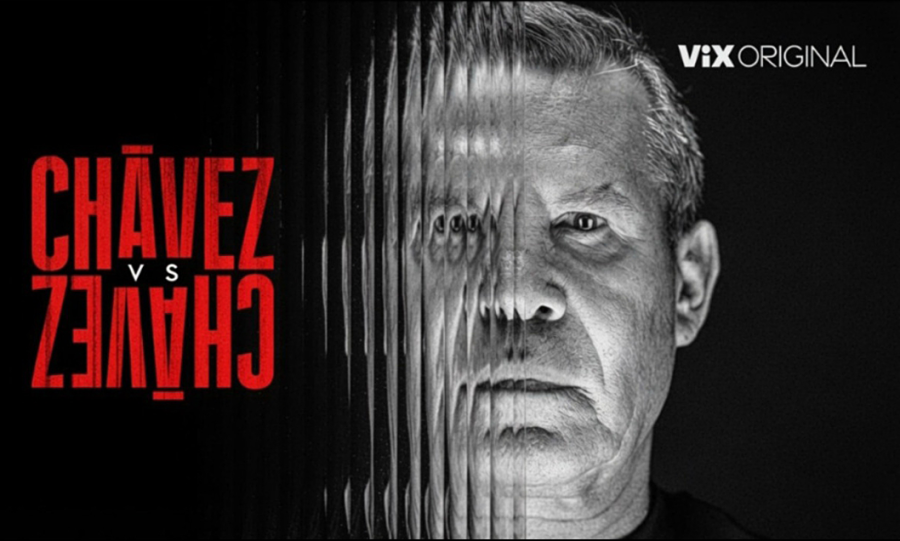
Legendary Mexican Boxing Icon Julio César Chávez
Opens His Life Beyond the Ring
In New ViX Documentary Series "Chávez vs. Chávez"!

(July 9th) The remarkable life and enduring legacy of legendary Mexican boxing champion and International Boxing Hall of Famer Julio César Chávez will be explored in unprecedented depth in the new documentary series "Chávez vs. Chávez," set to premiere on the ViX streaming platform this September. The five-episode documentary offers an intimate look at one of boxing's greatest champions while examining the complex relationship between Chávez and his son, former WBC middleweight world champion Julio César Chávez Jr.
Rather than serving as a traditional boxing retrospective, Chávez vs. Chávez presents a deeply personal portrait of two generations of one of boxing's most famous families. The series chronicles the triumphs, struggles, and emotional challenges experienced by both father and son, revealing how extraordinary success inside the ring often came with equally difficult battles outside of it.
Widely regarded as one of the greatest fighters in boxing history and considered by many to be the greatest Mexican boxer of all time, Julio César Chávez built a legendary career that included world championships in three weight divisions, a lengthy unbeaten streak, and memorable victories that made him a national icon throughout Mexico and Latin America. While celebrating those historic accomplishments, the documentary also examines his well-documented battles with substance addiction, his recovery journey, and the lasting impact those experiences had on his family.
The series also focuses extensively on Julio César Chávez Jr., exploring his rise to becoming a world champion while documenting the enormous expectations that accompanied carrying one of boxing's most recognizable surnames. Beyond his accomplishments in the ring, the documentary addresses Chávez Jr.'s struggles with injuries, addiction, family relationships, and the pressures of living in the shadow of his father's extraordinary legacy.
Directed by acclaimed Mexican journalist and documentary filmmaker Diego Enrique Osorno, Chávez vs. Chávez combines exclusive interviews, candid family conversations, training footage, testimonials from trainers, journalists, and longtime members of the Chávez boxing circle, along with never-before-seen home videos, personal photographs, and archival family material. The production aims to provide audiences with the most comprehensive and human portrait yet of the Chávez family's remarkable journey through fame, adversity, redemption, and reconciliation.
The documentary distinguishes itself by shifting the focus from championship belts and highlight-reel knockouts to the emotional realities that shaped one of boxing's most celebrated families. Themes of addiction, recovery, fatherhood, generational expectations, forgiveness, and resilience are central to the series, presenting an honest examination of the sacrifices and personal costs that often accompany sporting greatness.
Chávez vs. Chávez represents the latest major screen project chronicling the life of the Mexican legend, following the acclaimed 2007 documentary J.C. Chávez and the scripted biographical television series El César. However, this new production is positioned as the most intimate account to date, allowing both Julio César Chávez and Julio César Chávez Jr. to openly discuss their shared experiences, personal struggles, and family bond in an extended documentary format.
The five-part documentary series will make its exclusive debut on ViX this September, with additional release details expected to be announced by the streaming platform in the coming weeks.
Episode Breakdown — Chávez vs Chávez
(Season 1 — 6 Episodes)
1. The Bell Rings
Julio César Chávez prepares for his birthday celebration while confronting the emotional fallout of past addiction.
- Training sessions and rehab visits show his ongoing recovery.
- Family tensions surface: Junior, Omar, Cristian, and Nicole all play roles in the fractured family dynamic.
- Cristian’s surprise arrival becomes the emotional centerpiece.
2. The Encounter
A quieter, more intimate chapter focused on reconnection.
- Myriam visits Nicole in Mexico City.
- Julio visits his mother in Culiacán and unexpectedly reunites with Omar.
- The episode deepens the theme of family reconciliation.
3. Against the Ropes
The Chávez family attempts to mend relationships through a “wish list” chat.
- Nicole places her wish: a yoga class.
- Julio agrees—if she reconciles with Omar.
- A mural unveiling honors Julio’s legacy.
- Myriam and Cristian work behind the scenes to push father–son healing.
4. Revenge
A celebration of Julio’s 14 years of sobriety becomes the backdrop for new family challenges.
- Myriam struggles to organize a major event.
- Junior, now sober, acknowledges past mistakes.
- Cristian wants a family trip; Nicole searches for Omar.
- The episode centers on whether the family can unite in time.
5. Throw in the Towel
Tensions peak as Myriam pushes Julio to commit to party planning.
- Julio makes a controversial request that angers the family.
- The emotional strain between siblings intensifies.
6. Next Round
The season finale focuses on accountability and closure.
- Julio admits he made mistakes.
- Cristian and Myriam finally see their wishes fulfilled.
- The family moves toward healing—though not everyone is present.
This season reveals a raw, intimate portrait of addiction, recovery, and generational trauma. The Chávez family’s internal conflicts, especially between Julio, Junior, Omar, and Nicole. The emotional cost of being part of Mexico’s most famous boxing dynasty.
The Chávez family occupies a unique position in the history of professional boxing, representing not only sustained athletic achievement but also the complex interplay of family identity, public expectation, and personal adversity. While Julio César Chávez Sr. established one of the most celebrated careers in the sport's history, subsequent generations have navigated the opportunities and challenges associated with inheriting an internationally recognized surname. As a result, the Chávez legacy extends beyond competitive success to encompass broader themes of generational pressure, addiction and recovery, father–son relationships, and Mexican national identity. Examining the careers and experiences of multiple family members illustrates how athletic legacies are both preserved and transformed across generations.
The foundation of the Chávez legacy rests with Julio César Chávez Sr., whose accomplishments established a benchmark for excellence within professional boxing. Compiling a professional record of 107 victories, 6 defeats, and 2 draws, including 85 wins by knockout, Chávez captured world championships in the super featherweight, lightweight, and super lightweight divisions. His sustained success, highlighted by a 90-fight unbeaten streak, was characterized by an aggressive pressure-fighting style, exceptional durability, and technical mastery of body punching. Beyond his competitive achievements, Chávez became an enduring symbol of Mexican nationalism and working-class perseverance. His career elevated him beyond the status of elite athlete, transforming him into a cultural icon whose influence extended throughout Mexican society. Consequently, his accomplishments established extraordinarily high expectations for future generations of the Chávez family.
Julio César Chávez Jr., the eldest son, inherited these expectations before beginning his own professional career. Although he achieved considerable success, compiling a professional record of 53 wins, 6 losses, and 1 draw while capturing the World Boxing Council (WBC) middleweight championship, his career has frequently been interpreted through comparisons with his father's unparalleled accomplishments. Possessing notable physical advantages, resilience, and an effective pressure-fighting style, Chávez Jr. demonstrated the ability to compete at the highest level of the sport. Nevertheless, recurring injuries, weight-management issues, disciplinary concerns, substance abuse, and persistent public scrutiny significantly influenced public perceptions of his career. His professional trajectory illustrates the psychological burden frequently experienced by second-generation athletes who compete under the legacy of an exceptionally accomplished parent, where achievements are often evaluated relative to inherited expectations rather than individual merit.
The career of Omar Chávez provides an important contrast within the family narrative. Recording 40 victories, 7 defeats, and 1 draw, including 27 knockouts, Omar established himself as a capable professional boxer while remaining largely outside the intense media attention directed toward his older brother. His patient counterpunching style and consistent professional career exemplify the experiences of athletes who pursue competitive success without seeking—or receiving—the same level of public recognition. Omar's career demonstrates that athletic legacy can be expressed through perseverance and professional longevity rather than championship status alone. His experience further illustrates how family reputation can simultaneously provide opportunities and impose expectations, regardless of an individual's aspirations.
Cristian Chávez represents an alternative dimension of the family's legacy. Unlike his father and brothers, he chose not to pursue a professional boxing career. Instead, his role within the family has centered on preserving interpersonal relationships and contributing to the family's public narrative through appearances in documentaries and other media projects. Frequently described as a stabilizing influence during periods of familial conflict, Cristian underscores the reality that sporting legacies are maintained not only through competitive achievement but also through emotional support, reconciliation, and family cohesion. His involvement broadens the understanding of athletic legacy by demonstrating that contributions beyond athletic competition remain essential to preserving family identity.
Several interrelated themes define the Chávez family legacy across generations. Foremost among these is the burden associated with inheriting an iconic surname. The Chávez name carries substantial symbolic capital within professional boxing, creating expectations of excellence that extend beyond normal competitive standards. Both Julio César Chávez Jr. and Omar Chávez have confronted continual comparisons with their father's accomplishments, illustrating the psychological pressures that frequently accompany multigenerational sporting success. Their experiences reflect broader sociological patterns in which inherited reputations shape both public evaluation and individual identity formation.
A second defining theme is addiction and recovery. Substance abuse has profoundly influenced multiple members of the Chávez family, becoming an integral component of their public narrative. Julio César Chávez Sr.'s highly publicized struggle with addiction threatened both his career and personal well-being before his eventual recovery. Similar challenges later emerged in the life of Julio César Chávez Jr., reinforcing the intergenerational nature of these personal struggles. Their experiences illustrate how narratives of athletic achievement often coexist with narratives of vulnerability, emphasizing resilience and rehabilitation alongside competitive accomplishment. Consequently, addiction and recovery have become central elements in understanding the family's broader legacy.
The relationship between father and son constitutes another recurring theme within the Chávez family narrative. Interactions between Julio César Chávez Sr. and Julio César Chávez Jr. have been characterized by affection, high expectations, disappointment, conflict, and repeated efforts toward reconciliation. These dynamics reveal the complexities inherent in families where extraordinary athletic accomplishment intersects with parental responsibility. Rather than representing a simple story of inherited greatness, the Chávez family demonstrates how exceptional sporting success can complicate familial relationships by intensifying expectations and increasing public scrutiny.
Equally significant is the family's relationship with Mexican national identity. Julio César Chávez Sr. became more than a successful athlete; he emerged as one of Mexico's most recognizable cultural figures. Consequently, subsequent generations inherited not only a distinguished family name but also the symbolic responsibility of representing an important element of Mexican sporting heritage. This association has contributed to sustained public interest in each member of the Chávez family, reinforcing the connection between athletic achievement and national identity.
The Chávez family's enduring significance extends beyond the historical accomplishments of its individual members. Julio César Chávez Sr. continues to be regarded by many historians and analysts as the greatest Mexican boxer in history, ensuring the lasting prominence of his athletic legacy. At the same time, the family's collective experiences have expanded the meaning of that legacy beyond championship titles and competitive records. Their story encompasses addiction, recovery, generational pressure, family conflict, reconciliation, and the enduring influence of cultural identity. Contemporary media, including documentaries such as Chávez vs. Chávez, has further reinforced public engagement with these themes by presenting the family's experiences as both a sporting history and a broader exploration of resilience, identity, and the complexities of multigenerational fame. As a result, the Chávez family remains one of the most significant case studies in understanding how athletic legacies are constructed, sustained, and continually reinterpreted across generations.

 Print
Print