
“BBBofC Drops the Hammer On Horsehair Gloves:
Foam-Only Standard Coming In 2028”!
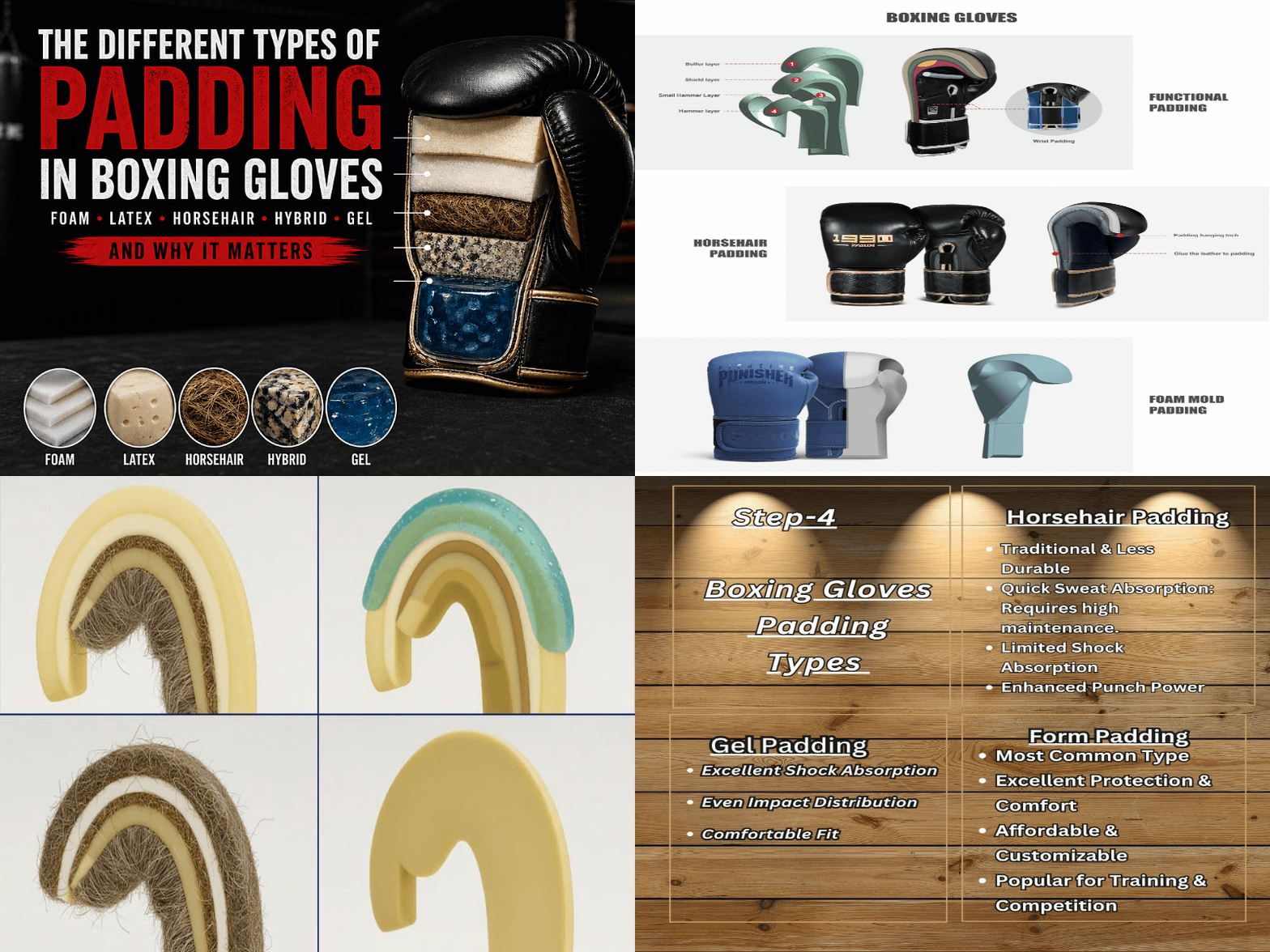
(September 18th) The British Boxing Board of Control is putting an end to one of professional boxing’s longest-running equipment debates. Beginning January 1, 2028, horsehair-padded gloves will be banned from contests conducted under the Board’s jurisdiction, forcing fighters and manufacturers to leave the traditional horsehair construction behind and move to a foam-only standard. The decision will reshape the glove landscape in British professional boxing and brings a definitive deadline to a type of equipment that has been at the center of repeated controversy over glove construction and padding.
Under the Board’s updated approved-glove guidance, “as of 1st January 2028, horsehair gloves will not be permitted,” with only gloves manufactured solely with foam or other approved padding eligible for approval. The change provides fighters, promoters, trainers and equipment manufacturers with more than a year to prepare for the new requirement and represents a significant change to the equipment standards governing BBBofC-sanctioned contests.
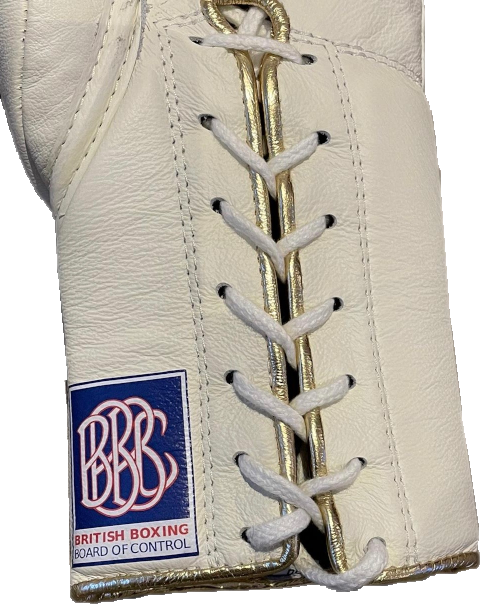
The Board currently requires all gloves used at tournaments under its jurisdiction to be approved by the BBBofC. Glove manufacturers seeking approval must submit their products through the Board’s approval process, while approved gloves must carry the official British Boxing Board of Control logo on the thumb side of the palm between the side seam and the bottom piping edge. The required logo measures 5.3 centimeters in height by 3.9 centimeters in width and must be applied by either a heat-pressed decal or screen-print application.
The new policy does not take effect immediately. Horsehair and hybrid gloves remain present on the Board’s current approved list during the transition period, but those constructions will no longer qualify once the January 1, 2028 standard comes into force. The change therefore establishes a defined deadline for manufacturers to transition their BBBofC-approved product lines to foam-only construction.
Horsehair gloves have long been used in professional boxing and differ from foam gloves in their construction, feel and behavior as the padding compresses during use. Their use has periodically generated controversy in major professional contests, with fighters, trainers and promoters at various times raising questions about glove construction and padding. Those disputes have included high-profile fights involving Tyson Fury and Deontay Wilder, Amir Khan and Kell Brook, and more recently Chris Eubank Jr. and Conor Benn. The BBBofC’s new regulation, however, applies specifically to equipment approval under its own jurisdiction and does not constitute a worldwide prohibition on horsehair gloves.
The Board’s published guidance does not provide a detailed public explanation of the specific rationale behind the 2028 change. The announcement instead establishes the equipment standard itself: horsehair gloves will no longer be approved, while gloves manufactured solely with foam or approved padding will remain eligible for approval under the Board’s system.
The forthcoming change will operate alongside the BBBofC’s existing glove regulations. Under the Board’s current Rules of Boxing, male contests from flyweight through welterweight are conducted with eight-ounce gloves, while contests from super-welterweight and above use 10-ounce gloves. Female contests use 10-ounce gloves. The regulations also require gloves to be thumb-attached and prohibit competitors from breaking down or manipulating the padding by twisting the gloves or removing padding from the potential striking area.
BBBofC regulations further state that gloves may be used only once during a promotion and that contestants must wear the same make of glove, subject to specific provisions covering championship and designated feature contests. Promoters are responsible for ensuring an adequate supply of approved gloves is available for each contest, while championship contests can be subject to additional arrangements concerning glove manufacturers by agreement and with the approval of the Board.
The practical effect of the new policy is that horsehair remains permissible within the BBBofC approval system during the current transition period, but its use in Board-sanctioned contests has a defined end date. From January 1, 2028, manufacturers seeking BBBofC approval will have to submit gloves that comply with the new foam-only requirement, while fighters and promoters operating under the Board’s jurisdiction will have to use equipment meeting the revised standard.
The announcement comes as the BBBofC prepares to introduce other changes to British professional boxing. The Board has also confirmed the creation of a new light-cruiserweight championship division, effective January 1, 2027, positioned between light heavyweight and cruiserweight. The new division will have a championship limit of 13 stone 5 pounds, or 187 pounds, and will be available for Area, English, Celtic and British titles.
For equipment manufacturers, the 2028 deadline provides a clear timetable to develop, modify and submit foam-only gloves for approval. For promoters, fighters and trainers, it signals the eventual end of horsehair glove construction in contests conducted under the BBBofC’s authority.
While the decision does not establish a global ban, it marks a notable change within one of professional boxing’s most established governing bodies. Beginning January 1, 2028, the British Boxing Board of Control’s approved-glove standard will move exclusively to foam-based construction, bringing an end to the use of horsehair-padded gloves in contests conducted under its jurisdiction.
Why It Matters
Horsehair gloves have long been used in certain professional bouts and are often associated with a different feel and distribution of padding than foam gloves. Their use has also been a recurring source of debate in boxing, particularly in high-profile controversies over glove integrity, padding, and fighter safety. The BBBofC’s decision gives promoters, fighters, trainers, and equipment manufacturers more than a year to prepare for a foam-only standard.
The announcement arrives alongside other recent BBBofC developments, including the Board’s introduction of a light-cruiserweight division.
It is a requirement of the British Boxing Board of Control that all gloves used at
tournaments under the Board's jurisdiction are approved by the Board. Glove manufacturers can apply for approval by contacting the Board's Head Office.
Approved gloves must have the British Boxing Board of Control's official logo applied to the gloves on the thumb side of the palm between the side seam and the bottom piping edge. The logo must be
5.3cm in height and 3.9cm in width and applied by either a heat pressed decal or screen print application. As of 1st January 2028, horsehair gloves will not be permitted. Only gloves manufactured
solely with foam / padding will be approved.
About The British Boxing Board of Control
The British Boxing Board of Control has been overseeing British professional boxing since 1929. During this time the role of the Board has changed immeasurably. In its early years the British Boxing Board of Control was concerned primarily with the procedural side of the sport such as the recognition of Championships. However, in the last few decades the raising of medical protection standards in British boxing has formed a major part of the Board’s work. Arbitration and disciplinary procedures, revision, upgrading and application of the Rules and Regulations, appointment of Referees and Timekeepers, the licensing of people involved in the sport and representation of the interests of British boxing internationally makes up the bulk of the remainder of the board’s work.
The Board was incorporated as a Limited Liability Company in 1989 and has approximately 2500 licence holders of which around 1100 are active boxers. Of these, the vast majority are semi-professional. There are only a few dozen British professional boxers who earn a full time living in the sport. Few British professional boxers these days have more than 12 contests a year and most compete only a handful of times. This trend has become most pronounced in the last 30 years.
To compare the careers of Tommy Farr and Lennox Lewis is illustrative. The former boxed for a total of 18 years (mainly between 1926 and 1940) and had 104 contests. The latter boxed for 14 years as a professional (between 1989 and 2003) and had only 44 contests. Freddie Mills the former World Light Heavyweight Champion and one of the most popular boxers of the 40s and 50s had 73 contests before he got a chance to challenge for the British and “Empire” Titles. World Super Middleweight Champion Carl Froch was able to challenge for the Commonwealth Championship in his 12th contest and the British in his 14th.
Concurrent with these changing career patterns there has been the increased activity of the Board in the area of medical controls and safeguards. The British Boxing Board of Control has never sought to deny that professional boxing is a physically hazardous sport and advises every licence holder of the potential dangers.
In addition, through its Medical Committee, the Board set up in 1950, it has provided British professional boxing with an unrivalled set of medical safety checks and balances. Like any effective system of checks and balances, this works through a mixture of the formal and informal.
Boxing is similar to most other professional sports in that it is a tight knit community. The relationship between the various officials involved works through a process of continuous dialogue, with the Board as the lynchpin. To the outside this can result in misunderstanding about the nature of the Board’s control over the sport. The following sections delineate the roles of the key people in the network of safeguards in British professional boxing.

 Print
Print