
York Hall Remains Closed
As Legionella Crisis Threatens
2027 Return For London Boxing Landmark!
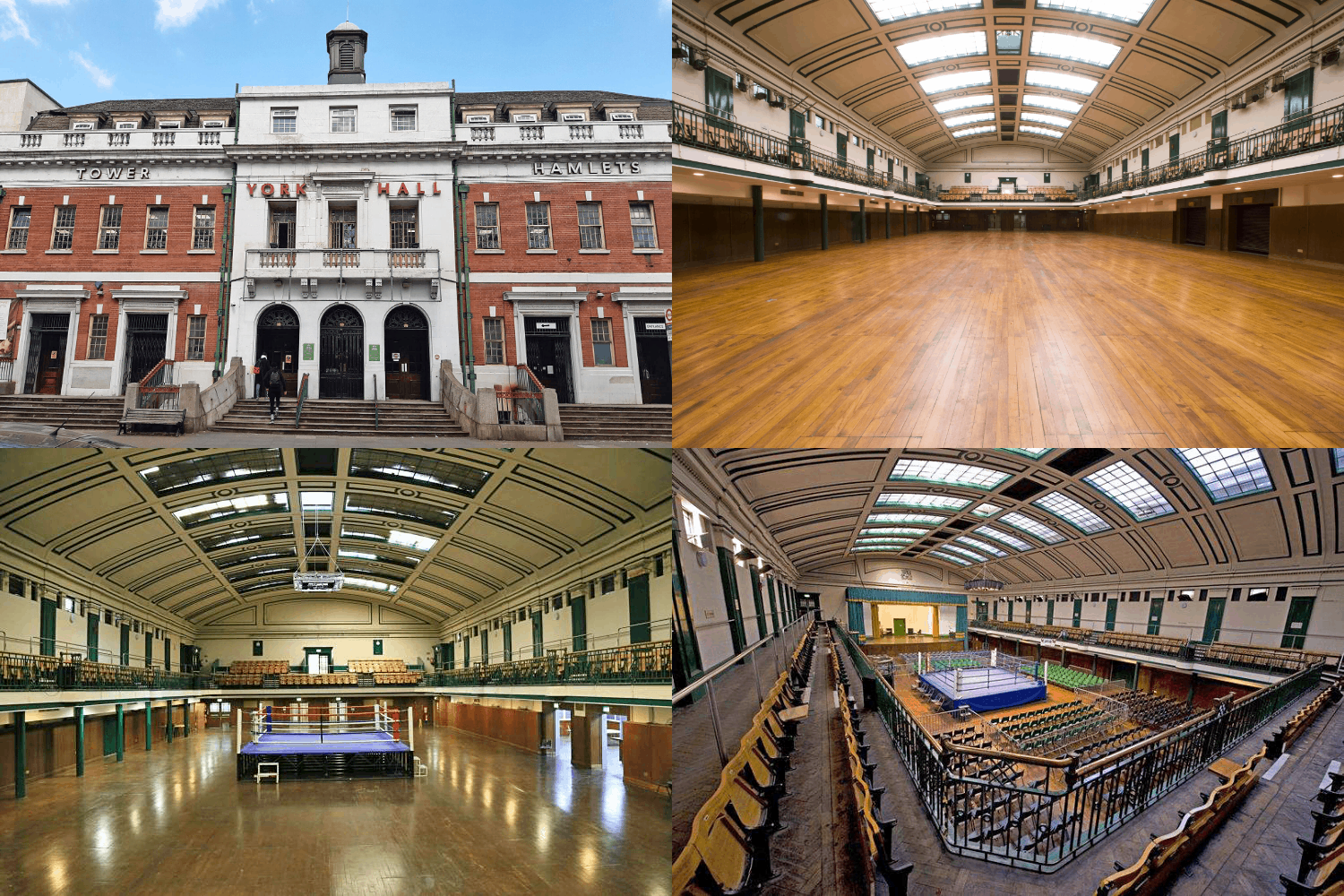
(November 4th) One of British boxing's most treasured institutions is facing an opponent that cannot be beaten with a left hook, a right hand or championship experience. York Hall, the legendary east London venue that helped launch the careers of generations of British fighters, remains closed following the discovery of Legionella bacteria in its water systems, with its long-awaited return now pushed towards January 2027 at the earliest.
For a venue synonymous with British boxing's grassroots culture, the situation is an extraordinary and deeply frustrating chapter in its nearly century-long history. However, an important distinction must be made: Legionella bacteria have been detected in the building's water systems, but there have been no reported cases of Legionnaires' disease linked to York Hall. Legionella can cause the potentially fatal pneumonia-like illness when contaminated water droplets or mist are inhaled. The closure is a precautionary measure while the council undertakes extensive remediation and independent safety checks.
The closure has become a much bigger undertaking than initially anticipated. Tower Hamlets Council officially shut the Old Ford Road complex on July 15, 2026, after routine water testing identified Legionella in its hot-water system. The council's initial public announcement described the problem simply as an operational water issue, saying the building would remain closed while investigations and remedial work were carried out. What was initially expected to be a relatively short interruption has since developed into a prolonged infrastructure project, with further investigations identifying Legionella in the cold-water system despite extensive treatment.
The biggest complication is the building's ageing and increasingly difficult-to-trace plumbing network. York Hall was constructed between 1926 and 1929, and portions of its water infrastructure are understood to be original. According to the council report presented to councillors, there is no complete record of the pipework, and some sections cannot even be traced. That has made locating and eliminating the source of contamination considerably more difficult than anticipated. In another unwelcome complication, asbestos has been identified in fixtures supporting redundant sections of pipework in the basement. Licensed contractors must remove those materials before the next stages of the plumbing programme can proceed. Importantly, the reported asbestos concerns relate to pipework supports and fixtures, not an allegation that the water pipes themselves are asbestos.
The council's latest indicative timetable provides a clearer picture of the battle ahead, although none of these milestones should be mistaken for completed work. Asbestos removal is scheduled to run through November 6, followed by pipework alterations between November 9 and 13. The water systems are then scheduled for cleaning and disinfection from November 16 to 20, with three rounds of water sampling planned between November 23 and 28. Results are expected on December 11. Even if the programme stays on schedule, reopening will not be automatic: the council requires three consecutive satisfactory test results and independent confirmation that the water systems are safe. A leisure service manager has warned councillors that previous testing has produced positive results and that further contamination cannot be ruled out. January 2027 is therefore an anticipated reopening target, not a guaranteed date.
The financial consequences are also mounting. The council's reported estimate puts the cost of the prolonged closure at approximately £924,000, taking account of lost income and repair expenditure. For a public leisure facility that combines swimming, fitness, spa services and a major sporting venue, the disruption reaches far beyond the boxing community. Be Well, Tower Hamlets Council's leisure operator, has also confirmed that the shutdown is being used to bring forward wider improvements, including infrastructure upgrades, refreshed customer areas and new equipment. The operator says the additional investment is intended to protect the long-term future of the Grade II-listed building rather than simply return it to its previous condition.
For local residents and York Hall members, the closure has created considerable inconvenience, particularly for those who rely on the centre for regular swimming, fitness classes and community activities. Be Well's October 2 update confirmed that customers who list York Hall as their home centre have been transferred to complimentary active memberships, with no membership fees payable until three months after York Hall reopens. Members can meanwhile use other Be Well facilities across the borough. Swim-school members receive the same membership arrangements, although alternative lessons depend on availability. Selected classes, including Pilates, women's BoxFit, yoga and Tai Chi, have also been relocated to Whitechapel Sports Centre and Poplar Baths Leisure Centre.
The council has also faced questions about how the closure was communicated. Local councillors criticised the lack of early, clear public information about the Legionella discovery, with residents reportedly learning the underlying reason through local media rather than direct council announcements. Questions were also raised about World Cup screenings held at York Hall on July 15 and 19, despite the contamination findings. The council maintained that those screenings were safe following specialist advice. At the subsequent committee discussions, Green Party councillor Rupert George questioned whether the public had been kept sufficiently informed, while Aspire Party councillor Halima Islam highlighted concerns raised by local residents. Senior council manager David Joyce acknowledged that although updates had been sent to members, the council could have been more proactive and had not communicated as effectively as it should have.
Yet it is the boxing community that will perhaps feel the emotional impact most keenly. York Hall is not simply another leisure centre with a boxing ring tucked inside. It is one of the most recognisable and historically important small-hall venues in British boxing, a place where aspiring professionals have fought in front of intimate, knowledgeable crowds while dreaming of bigger arenas, championship belts and international recognition. Its professional boxing heritage stretches back to the late 1940s, when promoters began transforming the former swimming pool into a fight-night arena by covering the pool and constructing a ring above it.
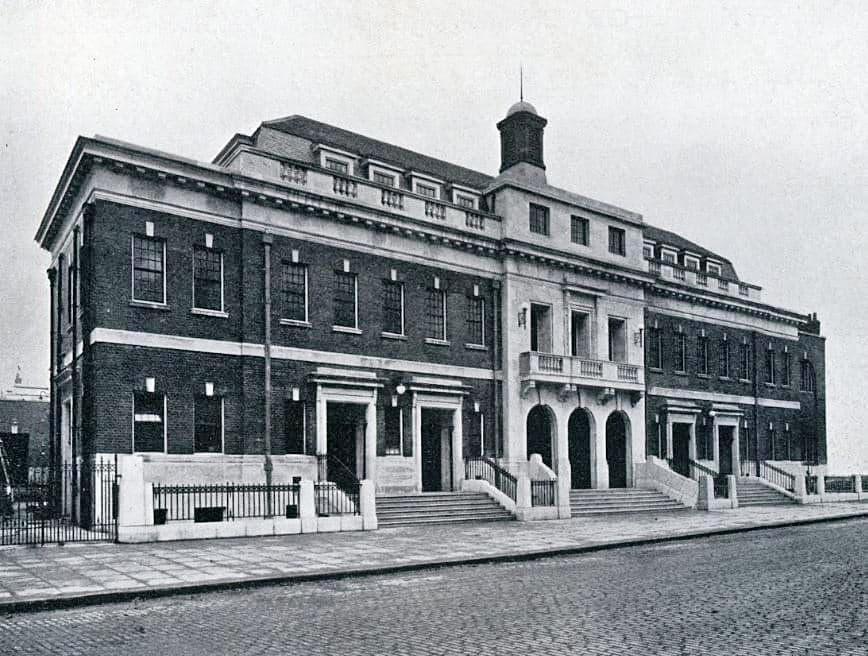
Opened on November 5, 1929, by the Duke and Duchess of York, York Hall was designed by borough engineer-architect A.E. Darby and originally served as a public baths, swimming pool and laundry complex. Today, it holds Grade II-listed status, having been officially recognised by Historic England in November 2013. Its history reflects the social fabric of working-class east London, where public baths once provided essential facilities for households without bathrooms of their own. As the decades passed, its boxing identity grew, and the venue became an enduring landmark in the British fight game.
The list of fighters associated with York Hall reads like a who's who of British boxing. Former world champions and heavyweight superstars including Tyson Fury, Anthony Joshua, David Haye, Carl Froch, Chris Eubank, Nigel Benn and Lennox Lewis have all been associated with the famous venue. Its importance extends beyond the names that eventually conquered the world, however. For hundreds of fighters, trainers, managers, promoters and boxing journalists, York Hall has represented the authentic heartbeat of the British professional boxing circuit.
York Hall has survived existential threats before. In 2004, the venue faced the prospect of closure amid financial and political controversy, prompting a campaign supported by prominent boxing figures, including promoter Frank Warren, Kellie Maloney and former world champion Charlie Magri. The campaign helped secure its future, and subsequent refurbishment work between 2005 and 2010 ensured the historic building continued serving its community and the sport. Its latest battle is different, but the determination to preserve its place in British boxing history will once again be tested.
There is also a wider significance to the prolonged shutdown at a time when British grassroots boxing is facing considerable challenges. Small-hall shows remain an essential pathway for developing professional fighters, providing opportunities for young prospects to gain experience, build followings and establish themselves before progressing to larger televised events. A December 2025 BBC Sport examination of the small-hall circuit highlighted the financial pressures facing promoters, declining ticket sales and the difficulty of creating opportunities for emerging fighters. Losing access to a venue as established as York Hall, even temporarily, is another setback for an already pressured part of the sport.
For now, the famous ring remains silent, its next chapter dependent on plumbing repairs, asbestos removal, specialist treatment and satisfactory water-testing results. The priority must rightly remain public safety, and the council cannot afford to rush the reopening simply to satisfy the understandable impatience of boxing supporters and local residents. But the hope is that when the doors finally reopen, York Hall will emerge not only safe but better equipped to serve another generation. British boxing has seen countless fighters overcome adversity inside its ropes. This time, the historic venue itself needs to overcome a fight outside them. January 2027 is the target. Whether York Hall makes that comeback will depend on the results of its most important contest in years.

 Print