
On This Day In Boxing History!
Welsh Boxers Leslie Williams & David Bowen
Pass In RMS Titanic Sinking 1912!
The sinking of the RMS Titanic in the early hours of 15 April 1912 claimed more than 1,500 lives, with most victims succumbing to drowning or hypothermia in the freezing North Atlantic. It remains one of the most studied maritime disasters in history. Among those lost were two young Welsh professional boxers, Leslie Williams and David "Dai" Bowen whose deaths endure as one of boxing’s most poignant “what if” stories.
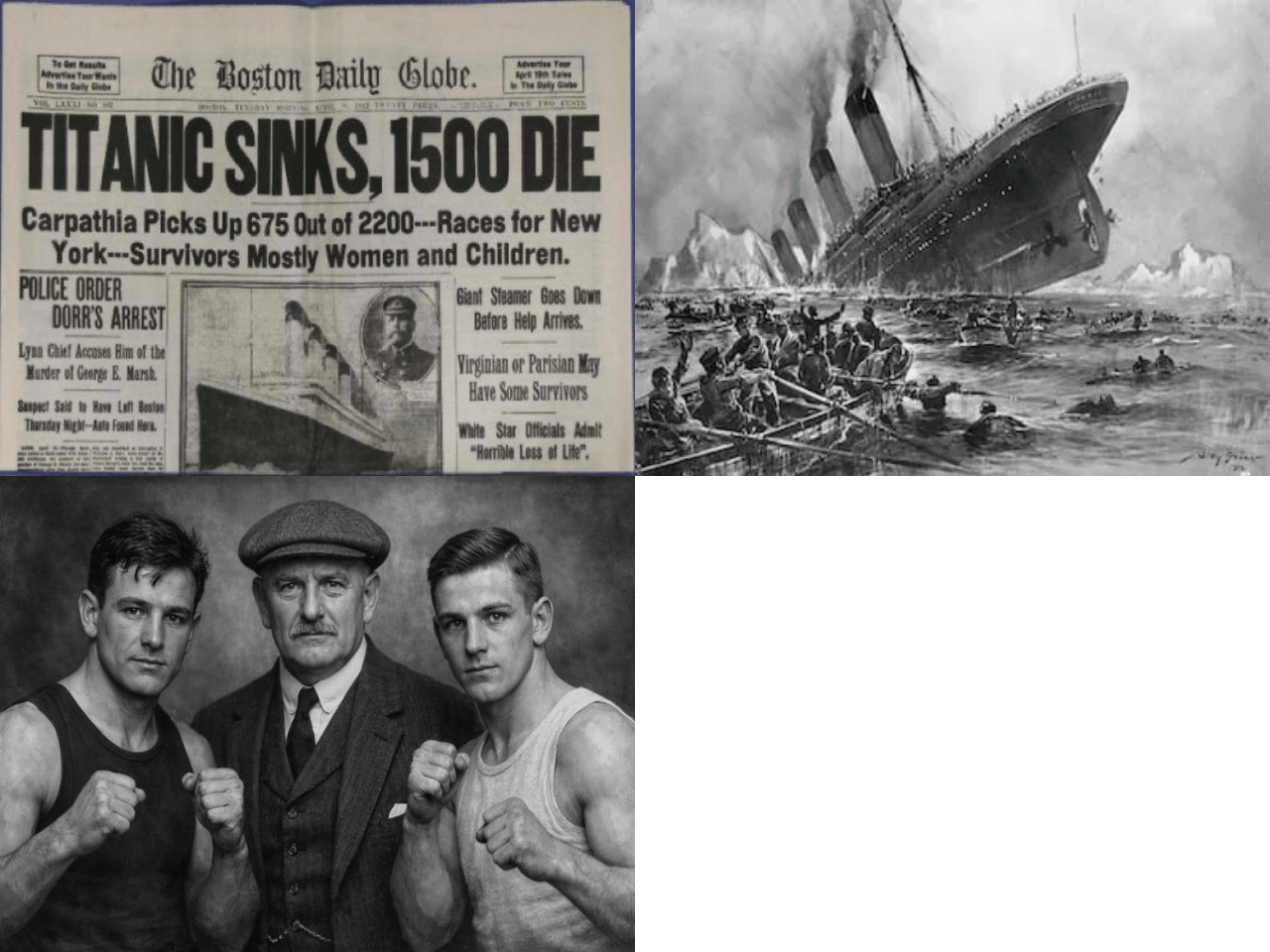
(Leslie Williams - trainer George Cundick - David “Dai” Bowen)
Williams, a bantamweight from Tonypandy, and Bowen, a lightweight from Treherbert, emerged from South Wales’ vibrant early 20th-century boxing scene. Both hailed from mining communities where the sport offered a rare path out of industrial hardship. They developed their craft in Jack Scarrott’s Boxing Booths, a rugged proving ground where fighters faced a constant stream of challengers for prize money, an environment that sharpened resilience, adaptability, and ring intelligence.
In professional terms, Williams had the longer résumé. Turning pro in 1908, he compiled a record of 12 bouts, 6 wins, 4 losses and 1 draw earning a reputation as a durable, aggressive operator. Bowen’s career was shorter but no less promising: active from 1910 to 1912, he fought eight times, with his final bout on March 5th, 1912 in Cardiff against “Young” Walters. Contemporary accounts consistently described him as a fast-rising talent with the potential to succeed abroad.
Their progress attracted the attention of American promoter Frank Torreyson, who in 1911 asked Welsh boxing writer ‘Chas’ Barnett to recommend two fighters for a series of bouts in the United States. Initially, Barnett proposed Williams alongside Jimmy "The Mighty Atom" Wilde of Tylorstown, Wales, later a Hall of Famer but Wilde was ultimately passed over due to concerns about his small size, not physically to board the ship but for the American promotional market. In Wilde’s place, Bowen was selected from a large field of contenders and offered what was described as a year-long opportunity in the United States.
Under the guidance of trainer George Cundick and manager Frank Torrison (whose name appears in various forms in historical records), the two fighters prepared for a career-defining journey. Their planned move reflected a broader trend of British boxers heading to America, where larger audiences and higher purses offered transformative opportunities.
After changes to earlier travel arrangements, reportedly involving delays in preparation they embarked from Southampton as third-class passengers aboard the Titanic on April 10th, 1912, bound for New York and the American boxing circuit. Life on board briefly carried a sense of optimism. Some accounts suggest Bowen wrote home describing a cheerful voyage with “plenty of fun,” and both men reportedly made use of the ship’s training facilities.
That promise ended abruptly on the night of 14 April, when the liner struck an iceberg at approximately 11:40 p.m. In the chaos that followed, third-class passengers faced severe barriers to reaching lifeboats due to the ship’s layout and restricted access routes. Williams and Bowen were among those trapped below as evacuation efforts unfolded unevenly. Within hours, the ship had sunk beneath the Atlantic.
In the aftermath, only one of the two fighters was recovered. Williams’ body was later retrieved by the cable ship CS Mackay-Bennett, identified, and buried at sea on 22 April 1912. Bowen was never found, and his final resting place remains unknown.
Their deaths extinguished two promising careers just as they were poised to step onto the international stage. More than a century later, the story of Leslie Williams and Dai Bowen stands as a stark reminder of how the Titanic disaster reshaped countless lives—including those of two young Welsh fighters chasing the American dream.

 Print
Print