
Senate Showdown: Ali Act Reforms Set Stage
For Boxing’s Defining Fight Over Power,
Protection, And The Future Of the Sport!
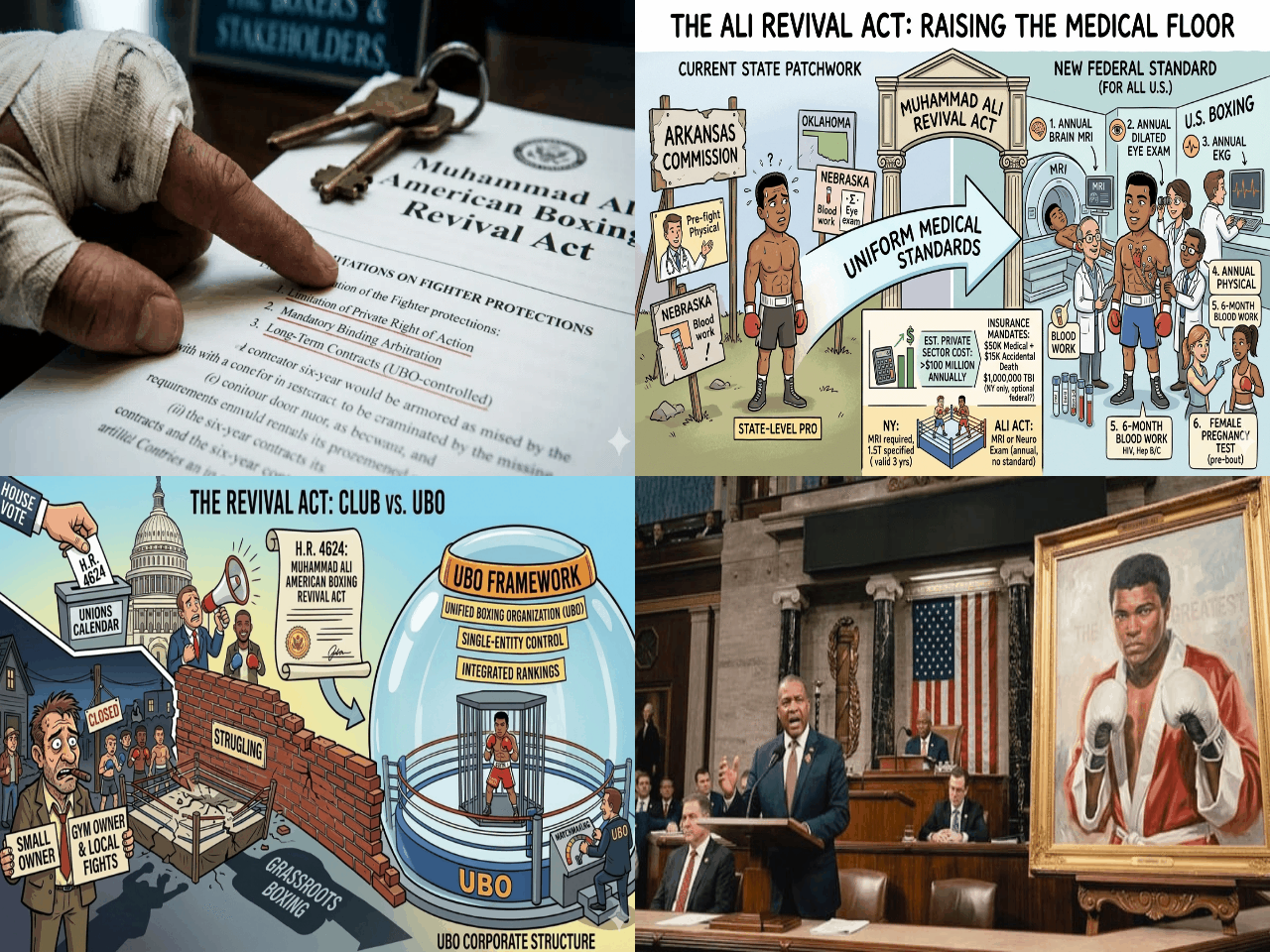
(April 20th) The U.S. Senate Committee on Commerce, Science, and Transportation is set to stage a consequential examination of boxing’s federal regulatory framework this Wenesday, April 22nd, with a hearing that could shape the sport’s future structure in the United States. Titled “Return to Your Corners: Have Federal Boxing Laws Gone the Distance or Slipped the Jab?
The session will begin at 10:00 a.m. ET in room SR-253 and focus on the state of the Muhammad Ali Boxing Reform Act alongside the proposed Muhammad Ali American Boxing Revival Act, which recently cleared the House of Representatives with strong bipartisan support.
At the center of the debate is whether the Ali Act, long regarded as a safeguard against exploitative promotional practices—remains sufficient in a rapidly evolving combat sports landscape. Enacted in 2000, the law was designed to ensure transparency in boxer compensation, separate promoters from sanctioning bodies, and protect fighters from coercive contractual arrangements. The Senate hearing, convened under Chairman Ted Cruz, has been framed as a neutral review, with testimony expected to reflect sharply divided views on how, or whether, the law should be modernized.
H.R. 4624 proposes a significant structural shift through the introduction of “Unified Boxing Organizations” (UBOs), a model that would consolidate promotion, rankings, matchmaking, and championship recognition under single entities operating with regulatory oversight. The concept mirrors vertically integrated systems seen in other combat sports and is designed to streamline operations, reduce sanctioning fragmentation, and potentially attract new investment into boxing. While participation in UBOs would be optional—allowing fighters to remain under the traditional sanctioning-body system—the proposal represents the most sweeping change to the sport’s governance in decades.
The legislation also introduces a series of standardized safety and compensation measures. These include mandatory annual medical examinations, periodic blood testing, brain imaging requirements following knockouts, and minimum injury insurance coverage of $50,000. Fighter pay floors—set at $200 per round—aim to elevate earnings at the developmental level, while provisions for a single primary world title per weight class seek to address longstanding criticism over the proliferation of championship belts.
A high-profile and ideologically diverse witness panel underscores the stakes. Promoter Oscar De La Hoya, head of Golden Boy Promotions, is expected to argue against UBO adoption, warning that consolidation could erode the Ali Act’s core protections. Former champion and current fighter Nico Ali Walsh is also anticipated to oppose major structural changes, aligning with traditionalist concerns. On the regulatory side, Timothy Shipman of the Association of Boxing Commissions is expected to emphasize enhanced oversight and uniform standards under the bill. Representing potential corporate entrants, Nick Khan, linked to TKO Group Holdings—is likely to outline the opportunities a unified model could create for large-scale investment and league-style organization.
Opposition to the bill has crystallized around fears that UBOs could effectively reintroduce the very conflicts of interest the Ali Act was designed to eliminate. Critics, including former heavyweight champion Evander Holyfield, have argued that allowing a single entity to control promotion, rankings, and titles risks monopolistic dominance and reduced bargaining power for fighters. Concerns also persist that financial disclosure requirements and contractual safeguards could be weakened under a consolidated model, even as safety provisions are strengthened.
Within the Senate, the hearing is widely viewed as a pivotal inflection point. While there is recognition of the bill’s potential to modernize safety standards and inject capital into the sport, lawmakers are signaling that amendments may be necessary—particularly around anti-consolidation protections and enforcement mechanisms. Historically, the Commerce Committee has played a key role in refining boxing legislation, and the split in testimony suggests further revisions are likely before any floor vote.
If enacted in its current form, H.R. 4624 could usher in a dual-track system in which fighters choose between the traditional sanctioning-body structure and participation in UBO-backed leagues. Proponents argue this flexibility could spark a “boxing renaissance,” marked by clearer championship pathways, improved fighter welfare, and increased commercial viability. Detractors counter that it may accelerate consolidation and fundamentally alter the sport’s competitive and economic balance.
The April 22 hearing will therefore serve as more than a procedural review—it represents a defining moment in the ongoing effort to reconcile boxing’s fragmented past with a more unified, and potentially more corporate, future.

 Print
Print