
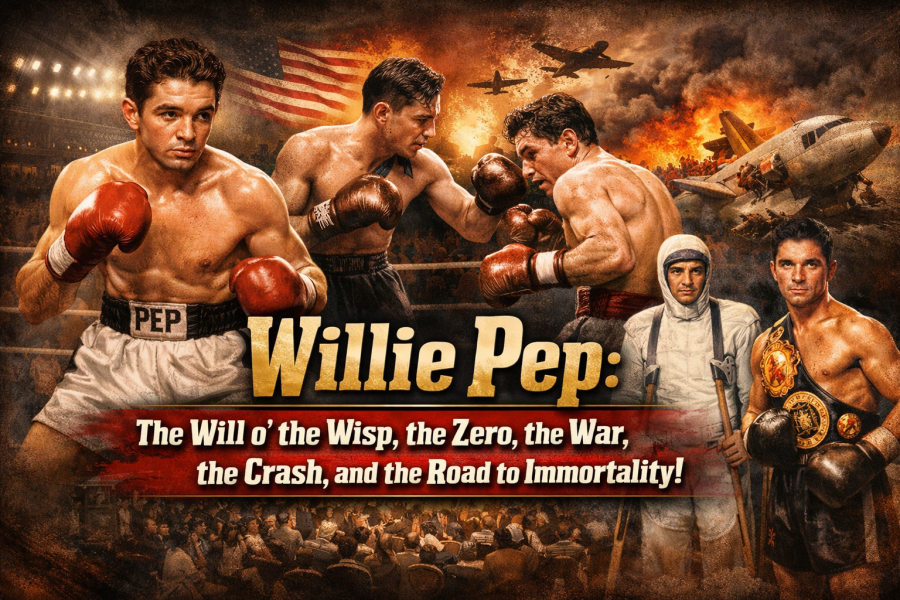
Willie Pep: The Will o' the Wisp, the Zero,
the War, the Crash, and the Road to Immortality!
(March 19th) Eighty three years ago today (1943) at a packed Madison Square Garden in New York City, one of boxing's most astonishing undefeated streaks came to an end. Twenty-year-old featherweight champion Willie Pep — the dazzling stylist known as "Will o' the Wisp" — entered the ring with a staggering 62-0 record. By the time the final bell rang ten rounds later, Pep had suffered the first defeat of his professional career, dropping a unanimous decision to the rugged former lightweight champion Sammy Angott. In the long view of boxing history, the loss barely registers as a setback. But on that cold wartime night in Manhattan, it was a reminder that even the most elusive fighters can be dragged into a fight.
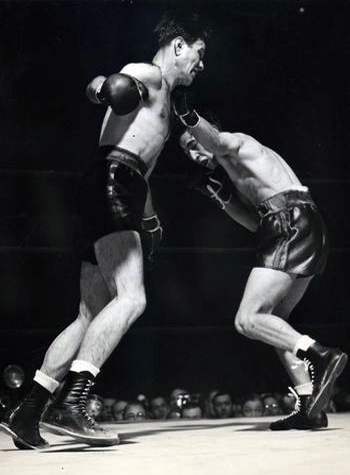
The matchup was fascinating from the outset. Pep was the embodiment of boxing artistry — speed, angles, defense, and rhythm. Angott, 69-17-5, by contrast, was a mauling pressure fighter, famous for roughhouse tactics and relentless body work. The bout was non-title and scheduled for 10 rounds, shortened by the New York State Athletic Commission to avoid complications with lightweight title rules, since Angott had recently been the undisputed 135-pound champion. Pep weighed roughly 130 pounds while Angott came in closer to 134, bringing both size and experience advantages. Pep was installed as about a 3-to-1 favorite, but anyone familiar with Angott knew the fight would not be pretty.
Before 16,834 fans, Angott executed a simple but effective plan: take away Pep's space. From the opening rounds he crowded the champion, digging hooks into the body and forcing exchanges. Pep's movement and counters kept the fight competitive, but Angott built an early lead on activity and physicality. There were no knockdowns, but the fight was hard and entertaining — more brawl than ballet. By the later rounds Angott began to slow, yet Pep could not fully erase the deficit. When the decision was announced, the judges sided with Angott unanimously, with scorecards reported in the neighborhood of 6-4 and 5-4-1. Pep's perfect record was gone.
To understand the magnitude of the moment, consider what Pep had already accomplished. After turning professional on July 10, 1940, he had compiled his 62-fight winning streak in less than three years — a pace that borders on unimaginable today. Fighting frequently during the early years of World War II, often boxing multiple times per month, Pep had won the New England featherweight title, captured the recognized world featherweight championship with a 15-round decision over Chalky Wright at Madison Square Garden, and established himself as the sport's premier defensive wizard. When he entered 1943, he was already considered the best featherweight in the world. For Angott, meanwhile, the fight was a comeback — he had briefly stepped away from boxing in late 1942 due to a hand injury, and Pep was supposed to be a tough test. Instead, Angott delivered one of the biggest wins of his career.
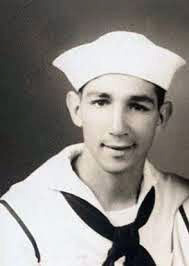
If the loss was meant to derail Pep, nobody told Pep. Just ten days later he was back in the ring and back in the win column. And within months, a far greater challenge arrived — not from any opponent, but from his country. When World War II called, Pep answered. He enlisted in the U.S. Navy in early 1943 and received an honorable discharge in 1944, before briefly re-enlisting in the U.S. Army in 1945. What made his service remarkable was what ran alongside it: he never stopped fighting. Often competing on military bases, Pep defended his world featherweight title multiple times during this period — against Sal Bartolo twice, Phil Terranova, and others — going 43-0-1 in 44 bouts without missing a meaningful beat. He returned to full civilian boxing by mid-1945 with his unbeaten streak and championship intact. In the 1940s, fighters fought — and Pep fought for his country and his title at the same time.
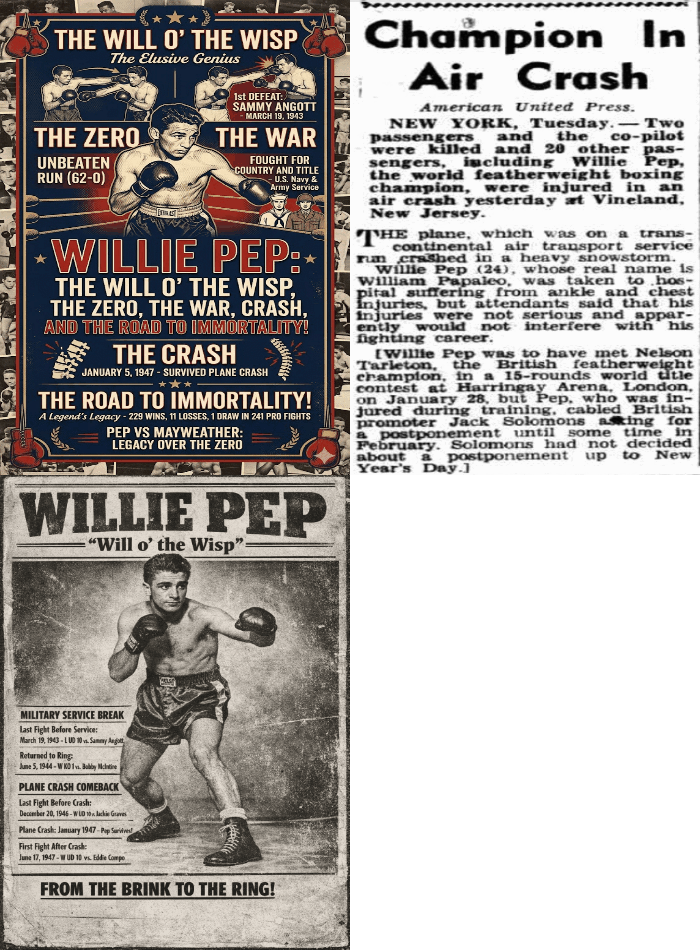
What followed his return to civilian life borders on absurd. Pep embarked on a monumental unbeaten run following the Angott defeat, going 72 straight fights without a loss — including one draw — over the next several years. By early 1947, his record stood at roughly 134 wins and just one loss, and he was the undisputed king of the featherweight division. Then, on January 5, 1947, the sport's greatest defensive artist faced something he could not slip, duck, or sidestep. A plane Pep was traveling on crashed near Millville, New Jersey, killing three people and injuring many others aboard. Pep suffered severe injuries — multiple fractured vertebrae, a shattered left leg, and a broken back — and was placed in a full body cast. Doctors were blunt: his boxing career, they believed, was over. None of it, they implied, would matter again.
They were wrong.
Just six months after the crash, on July 8, 1947, Pep walked back into a boxing ring and stopped Jock Leslie in six rounds. He went on to win 10 consecutive bouts that year alone. Lingering effects from his injuries — reduced punching power, greater reliance on movement and angles — were noted by observers, though in truth Pep had always been a supreme defensive artist rather than a puncher. His career knockout total across 241 fights was approximately 65, a figure that reflects his genius: he didn't beat opponents into submission, he made them miss until they had nothing left.
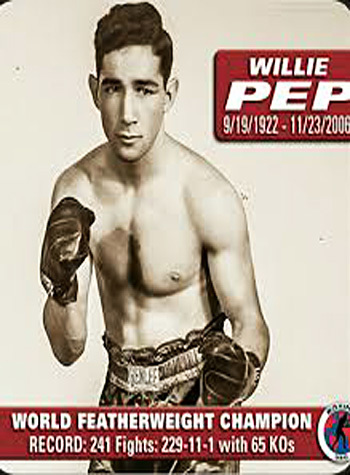
His second defeat ultimately came on October 29, 1948, when the devastating puncher Sandy Saddler knocked him out in four rounds to capture the featherweight title, sparking one of the most famous rivalries in boxing history. Pep would go on to face Saddler four times in total, losing three, with the physical toll of his crash injuries believed to have played a role in his later years. He boxed on until 1966, finishing with a final record of 229 wins, 11 losses, and 1 draw in 241 professional fights — 137 of them before his second defeat.
The loss to Angott on March 19, 1943 wasn't the end of a legend. Neither was a plane crash in a New Jersey field, or the wars fought abroad and in the ring. If anything, the full arc of Willie Pep's life — from pre-war prodigy to wartime champion to crash survivor to Hall of Famer — highlights something beyond boxing skill. A fighter who could go 134 bouts before losing twice, serve his country without surrendering his title, and walk out of a wreckage and back into a ring didn't just have talent. He had something rarer. From the brink to the ring, and back again — that was Willie Pep.
Which brings us, inevitably, to a question the modern era forces upon us. Willie Pep and Floyd Mayweather Jr. share a stylistic bloodline — elusive, defense-first fighters built on lightning reflexes, precise footwork, and razor-sharp counterpunching. But the worlds in which they operated could hardly be more different, and nowhere is that contrast sharper than in how each man related to the concept of the unbeaten record.
Mayweather went 50-0 with 27 knockouts across a career that stretched from 1996 to 2017, self-styled as "TBE" — The Best Ever — his zero guarded as carefully as any title belt. In the modern era, where a single mega-fight can define an entire year and an unblemished record becomes its own commercial currency, that zero carried enormous weight. His matchmaking reflected it. Pep, by contrast, never had the luxury of protecting anything so fragile. He fought 241 times across 26 years, facing whoever was put in front of him — week after week, year after year — in an era of relentless matchmaking where legacy was built fight by fight against all comers, not curated from the top down. His 11 losses, spread across a quarter century of nearly constant competition, tell a far more human story than a perfect ledger ever could.
Both men mastered the art of not getting hit. Both were, in their respective eras, widely considered the finest defensive practitioners the sport had ever produced. But the comparison ultimately circles back to a deeper question about what boxing is actually measuring. Is the unbeaten record the truest mark of greatness — a testament to discipline, preparation, and the refusal to take unnecessary risks? Or is it, at some point, a limitation in itself — a number so precious it begins to shape the fights that are made rather than the fighter who makes them? Pep lost 11 times and is remembered as one of the greatest who ever lived. His record wasn't perfect. His career was.
The almighty zero, it turns out, is only as meaningful as the fights behind it.

 Print
Print