
Olympic Champion Imane Khelif Entering
The Professional Market Amid Interest,
Offers, and Regulatory Uncertainty!
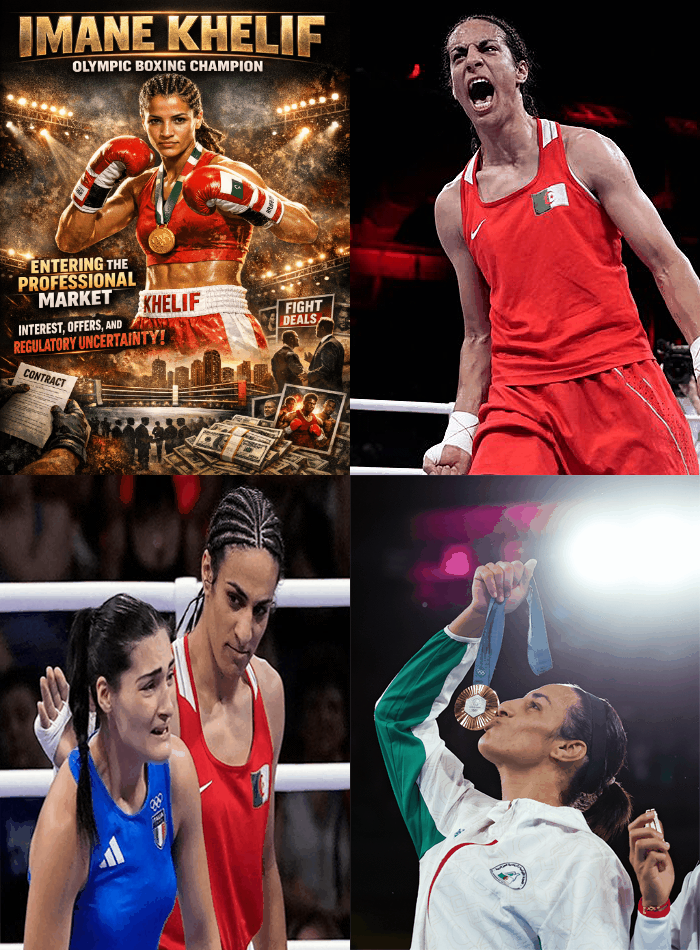
(March 18th) Algerian boxing star Imane Khelif has emerged as one of the most discussed fighters to transition from the Olympic stage to the professional ranks in the mid-2020s. Her situation is unusual: she enters the market as a newly crowned Olympic champion, already holding a recorded professional bout, while simultaneously navigating a highly public dispute over gender-eligibility rules in amateur boxing. The result is a rare collision of commercial opportunity and regulatory uncertainty shaping her professional future.
Khelif rose to global prominence by winning the women’s welterweight gold medal at the 2024 Summer Olympics, becoming Algeria’s first female Olympic boxing champion. Born in 1999 in Laghouat, Algeria, the orthodox boxer built a substantial amateur résumé before turning professional, including a silver medal at the 2022 Women’s World Championships and strong Olympic campaigns.
Her Olympic run in Paris was marked not only by dominant performances but also by intense global attention. The controversy surrounding a brief bout with Italian opponent Angela Carini—who stopped their fight early—amplified media coverage and drew political commentary from figures such as Italian prime minister Giorgia Meloni. Despite the noise around the event, Khelif ultimately captured gold and significantly increased her global profile.
Although much of the public discussion framed Khelif’s post-Olympic plans as a “future” professional transition, she had already technically entered the paid ranks before the Games. According to boxing records, Khelif fought her first professional bout on November 23, 2023, defeating Thai fighter Suwanun Antanai at the Marina Bay Sands Hotel in Singapore.
The bout ended via third-round technical knockout, giving Khelif a 1–0 professional record. At the time of the fight Antanai held a 4–11 record, positioning her as a typical journeyman opponent used to introduce a prospect to the professional circuit. After the bout, Antanai fought only once more before reportedly facing an indefinite suspension from Japanese boxing authorities.
Because Khelif continued competing at the elite amateur level after that fight—including her Olympic run—many observers overlooked the debut until it resurfaced in media fact-checks following the Games.
Following her Olympic triumph, Khelif publicly confirmed that she was evaluating several promotional opportunities but few confirmed.
“I have many offers,” she said while discussing her move to the professional ranks, though she noted she had not yet decided where she would sign. The identity of those offers, however, remains largely undisclosed. Two major promoters frequently mentioned in connection with Khelif are: Eddie Hearn of Matchroom Boxing and Frank Warren of Queensberry Promotions.
Hearn has publicly stated he would be open to signing Khelif if regulatory questions surrounding eligibility were clarified, describing her as a talented and commercially compelling athlete.
Warren has also been widely discussed by fans and boxing media as a potential promoter, though reports indicate that neither promoter has publicly confirmed submitting a formal contract offer as of early 2026.
The discrepancy between public interest and confirmed negotiations reflects a cautious approach from major promoters assessing both commercial upside and regulatory risk.
Much of the uncertainty surrounding Khelif’s career stems from a dispute between international boxing authorities. In 2023, the Russian-led International Boxing Association (IBA) disqualified Khelif from the Women’s World Championships after claiming she failed unspecified eligibility tests. The decision was strongly criticized by the International Olympic Committee (IOC), which described the move as sudden and lacking due process. The IOC allowed Khelif to compete at the Paris Olympics, where she ultimately won gold but subsequent developments have added further complexity.
The governing body World Boxing introduced mandatory sex-verification testing in 2025. Khelif appealed requirements tied to those rules. She has stated that she has naturally elevated testosterone levels and is undergoing medical supervision to manage them.
Despite widespread speculation online, credible reporting indicates there is no evidence that Khelif identifies as anything other than a woman, and she has competed exclusively in women’s divisions throughout her career.
Khelif’s situation illustrates a broader tension within boxing. On one side, promoters see a highly marketable athlete:
***Olympic gold medalist
***First Algerian female boxing champion at the Games
***Rapidly growing social-media presence and global recognition
On the other side, regulatory questions surrounding eligibility rules—and the ongoing power struggle between amateur boxing bodies—create uncertainty about how future sanctioning organizations might handle her participation.
For promoters, this dynamic represents both risk and opportunity. If regulatory clarity emerges, Khelif could enter the professional ranks with rare crossover appeal, potentially becoming one of the most recognizable women’s fighters to transition from the Olympic system in recent years.
Imane Khelif is already technically a professional boxer with a 1–0 record from a 2023 TKO win in Singapore, but
her full-time transition to the professional circuit remains unresolved. Multiple promoters are believed to be interested, yet no major promotional signing has been publicly confirmed. As eligibility
debates continue within boxing’s governing bodies, Khelif’s next move will likely shape not only her own career but also the sport’s evolving rules around athlete
eligibility.
In the months following the 2024 Olympic Games in Paris, few boxers have generated as much global discussion as Algeria’s Imane Khelif. Fresh off a historic Olympic triumph, the welterweight standout now stands at the center of a complex transition: a move toward professional boxing that combines major promotional interest, an existing but little-known pro debut, and an unresolved debate about gender-eligibility rules in the sport.
For promoters, Khelif represents a rare opportunity—a newly crowned Olympic champion with international recognition and the potential to become a global face of women’s boxing. For regulators, however, her career unfolds amid one of the sport’s most politically charged governance disputes in years.
The result is a fighter whose next steps could influence not only her own career trajectory but also broader debates about eligibility rules and the future structure of amateur and professional boxing.
Khelif’s rise to global prominence was cemented at the 2024 Summer Olympics in Paris, where she captured the women’s welterweight gold medal. The victory made her Algeria’s first female Olympic boxing champion and elevated her into the highest tier of amateur boxing.
Before Paris, Khelif had already built a strong international résumé, including a silver medal at the 2022 IBA Women's World Boxing Championships. Her amateur record—often cited around 41 wins against nine losses—reflected years of steady progress through the Olympic system. But it was the Olympic stage that turned Khelif into a global figure. Her run to gold came under intense media scrutiny, particularly after a brief and controversial bout against Italian fighter Angela Carini, who withdrew early from their contest. The moment sparked international debate, political commentary, and widespread social-media attention—far beyond the usual reach of amateur boxing. Despite the surrounding controversy, Khelif completed the tournament undefeated and secured Olympic gold, placing her among the most visible athletes of the Games.
While many reports framed Khelif’s Olympic victory as the starting point for a future professional career, the reality is slightly more complicated. She had already entered the paid ranks once before.
On November 23, 2023, Khelif fought Thailand’s Suwanun Antanai in Singapore at the Marina Bay Sands complex. The fight ended with Khelif scoring a third-round technical knockout, giving her a professional record of 1–0.
At the time, Antanai carried a modest 4–11 record, typical of an opponent selected to test a debuting prospect. After the bout, Antanai fought only once more before reportedly facing an indefinite suspension from Japanese boxing authorities, adding an unusual footnote to Khelif’s lone professional appearance.
Because Khelif continued to compete in amateur tournaments—including her Olympic campaign—the debut largely went unnoticed by mainstream media until after the Paris Games.
Khelif’s Olympic success has inevitably attracted interest from the professional side of the sport. She has publicly stated that she is evaluating “many offers” from promoters as she considers where to launch her full-time professional career. Yet despite the widespread speculation, very few specific negotiations have been confirmed.
Two prominent figures whose names repeatedly surface in discussions are Eddie Hearn and Frank Warren, leaders of two of Britain’s most influential boxing promotions. Hearn, the head of Matchroom Boxing, has said publicly that he would consider signing Khelif if questions surrounding her eligibility were clarified. His comments reflect both the potential marketability of an Olympic champion and the caution promoters are exercising while regulatory disputes remain unresolved.
Warren, who runs Queensberry Promotions, is also frequently mentioned by fans and media as a possible landing spot. However, like Hearn, he has not confirmed making a formal contract offer. For now, the “many offers” Khelif references appear to include a mixture of potential interest from major international promoters and smaller regional outfits seeking to capitalize on her Olympic fame. The hesitation from promoters stems largely from an ongoing dispute between boxing’s governing organizations.
In 2023, the International Boxing Association disqualified Khelif from its women’s world championships, stating that she had failed unspecified gender-eligibility tests. The decision was controversial and widely criticized.
The International Olympic Committee, which had already stripped the IBA of its authority over Olympic boxing due to governance issues, rejected the ruling and allowed Khelif to compete at the Paris Olympics.
Subsequently, the newly established World Boxing Federation introduced sex-verification testing requirements for international competition beginning in 2025. Khelif has challenged aspects of those rules while continuing to assert that she has always competed as a woman.
Medical discussions surrounding her case have also referenced naturally elevated testosterone levels, a condition that has occasionally appeared in elite sport but remains highly politicized in public debate.
From a commercial perspective, Khelif represents exactly the type of athlete promoters typically pursue: an Olympic gold medalist entering the professional ranks with a compelling personal story and global name recognition.
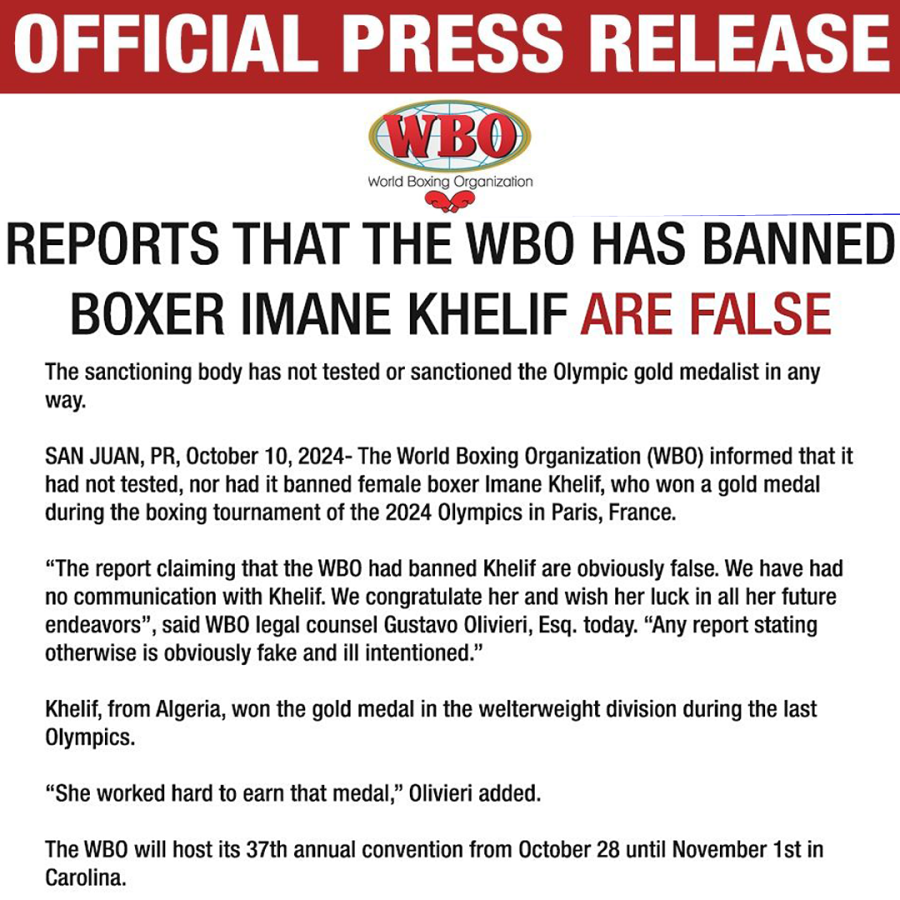
Yet boxing’s fragmented governance structure means that decisions about eligibility, sanctioning, and regulation do not always move in lockstep across amateur federations and professional organizations.
That uncertainty has produced an unusual pause in what would otherwise be a straightforward transition from Olympic success to professional stardom.
For now, Khelif remains in a holding pattern—an Olympic champion with a single professional victory and multiple offers reportedly under consideration.
Promoters see Imane Khelif as a marketable Olympic gold medalist entering the pro ranks, while regulators remain cautious because of unresolved disputes over gender‑eligibility testing, conflicting rulings between the IBA and IOC, and ongoing legal challenges. This clash between commercial opportunity and regulatory uncertainty has created a rare, highly public divide in boxing.
Where she signs, and how boxing’s regulatory debates evolve, could determine not only the course of her own career but also the sport’s handling of similar eligibility disputes in the future.
In a sport often defined by clarity inside the ring, Imane Khelif’s next move will be decided largely outside it.

 Print
Print